Comfort Starts with a Right-Sized Sunroom Plan
Sunroom heating and cooling can fail when the equipment is chosen before the room itself is fully planned. A bigger AC unit or stronger heater does not automatically create year-round comfort. Sunrooms behave differently from interior rooms because they have more glass, more sunlight, more exterior surfaces, and a closer connection to outdoor conditions.
Across Texas, we see how quickly a bright room can change throughout the day. A sunroom may feel pleasant in the morning, become hot and humid during the afternoon, then need a different level of temperature control after sunset. That is why we treat comfort as part of the design conversation, not a detail to figure out after construction.
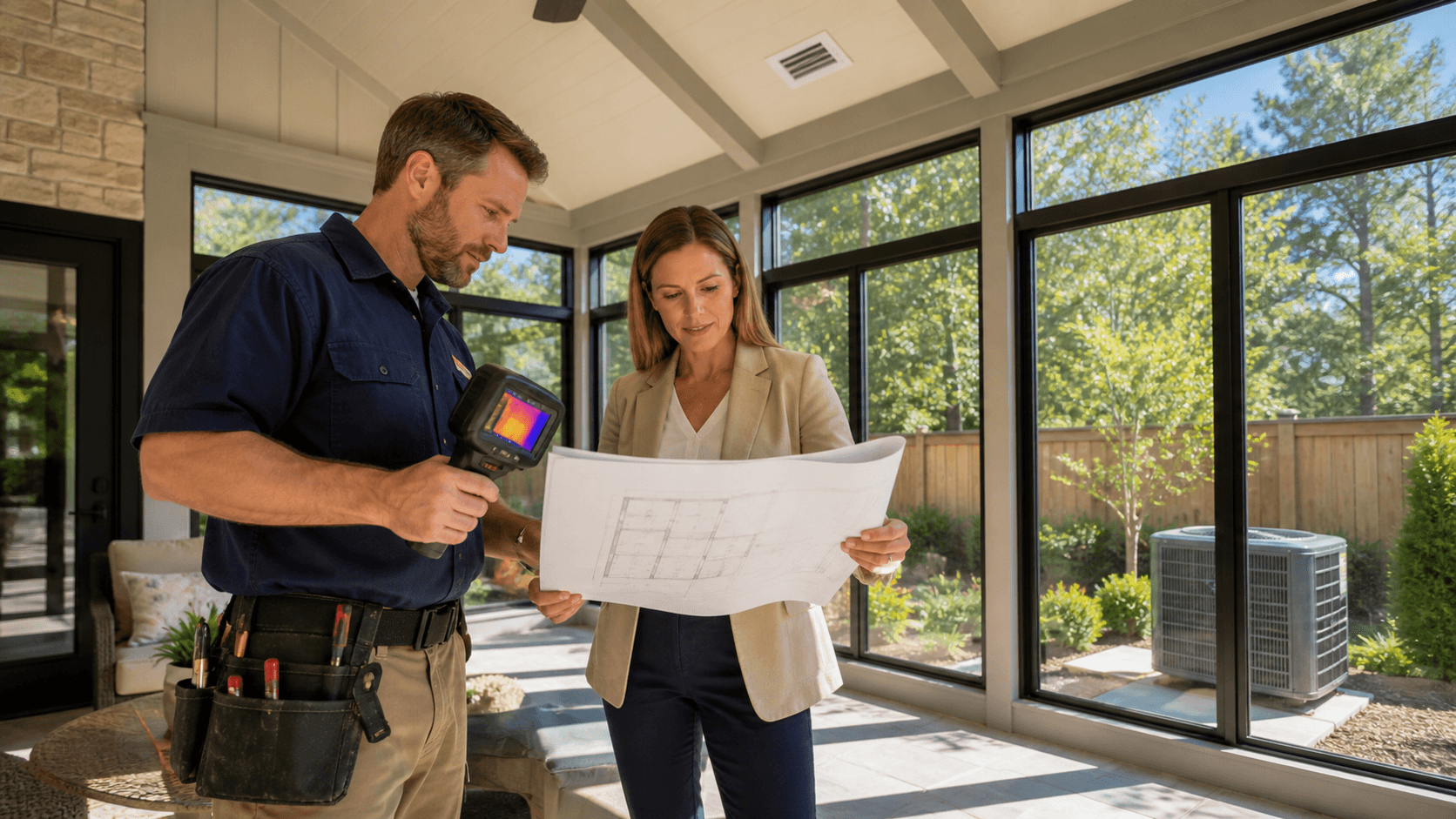
Load planning is the process of estimating how much heating and cooling a specific sunroom will need. It helps us look beyond square footage and consider how the room will respond to sun, heat, humidity, air movement, and seasonal temperature shifts. Planning ahead can prevent uneven temperatures, inefficient equipment operation, and frustrating changes later.
Why a Load Calculation Matters
A heating and cooling load calculation estimates the amount of heat that enters and leaves a room. In a standard bedroom, the load may be shaped mostly by wall insulation, a few windows, and the home's existing HVAC system. In a sunroom, large glass areas, roof exposure, and multiple exterior walls can create a very different situation.
Before we recommend a sunroom heating and cooling approach, several details deserve a close look:
- Square footage and ceiling height
- Window and door sizes
- Glass type and overall window performance
- Wall, roof, and floor insulation
- Air sealing, roof construction, and room orientation
Two sunrooms with the same floor area may need very different levels of cooling. For example, one room may face east and receive gentler morning light, while another faces west and takes on strong afternoon sun. A room with a taller ceiling, more glass, or limited shade can also behave very differently from one with a more protected design.
Load planning helps answer a key question: can the home's existing HVAC system comfortably support the new space? Sometimes it can. In other cases, the sunroom may need its own dedicated solution to avoid putting too much demand on the rest of the house.
Glass, Orientation, and Insulation Shape Comfort
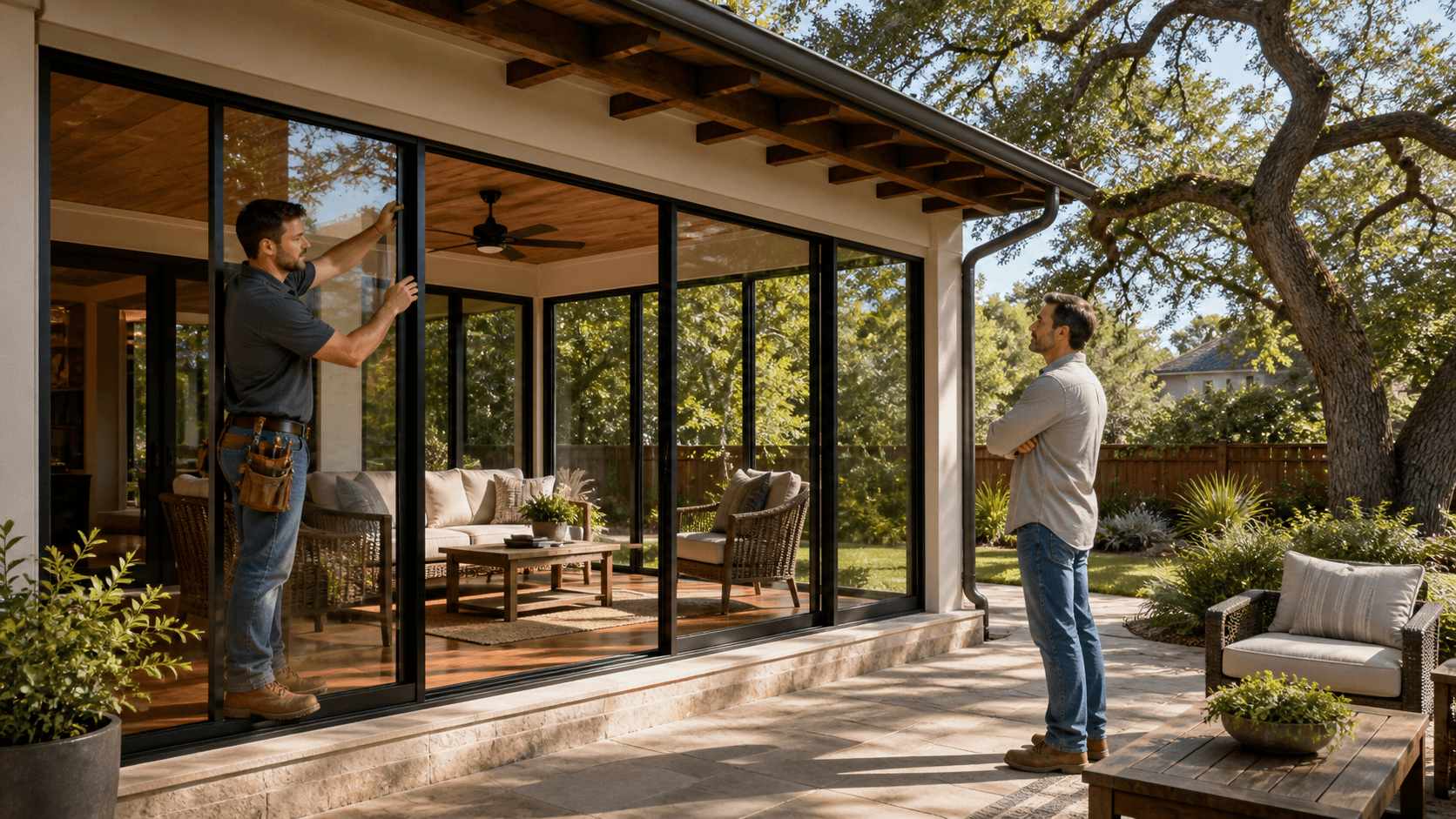
Glass is one of the main reasons sunrooms are so enjoyable. It brings in daylight, creates open views, and helps the room feel connected to the outdoors. At the same time, glass can allow a great deal of solar heat into the space, especially during Texas afternoons.
Thoughtfully selected window systems can help manage that heat transfer while keeping the bright, open feel homeowners want. Insulated glass and low-emissivity coatings can play a meaningful role in controlling how much heat moves through the glass. These choices work best when they are made as part of the overall sunroom design.
Direction matters, too. A west-facing sunroom may receive intense late-day sun during late summer and early fall. A north-facing room may get less direct light, which can change how it feels at different times of day. We also consider shade from nearby trees, neighboring structures, patio covers, and roof overhangs.
The roof, walls, and floor all matter just as much as the windows. A well-planned sunroom should account for:
- Insulation inside the roof and wall systems
- Weather sealing around windows, doors, and connections
- Framing methods that support the intended room design
- Roof materials that affect heat transfer
- Shading features that reduce direct solar exposure
Energy performance is not something to tack on at the end. When glass, insulation, orientation, and shading work together, it is easier to create a space that feels more consistent from one part of the day to the next.
Why Bigger Equipment Is Not Always Better
It is easy to assume that oversized equipment will solve a hot sunroom. In reality, an air conditioner that is too large may cool the space too quickly and shut off before it has had time to manage humidity well. This pattern, often called short cycling, can lead to frequent starts and stops, added wear on the system, and a room that feels cool but still damp.
Equipment that is too small has the opposite problem. When solar heat gain rises during a bright afternoon, the system may run for long periods without bringing the room to the desired temperature. You may notice warm areas near windows, uneven comfort between the sunroom and the rest of the home, or a space that becomes difficult to use during the hottest hours.
The right answer depends on the room's actual load, not on a guess. Depending on the design and the capacity of the existing HVAC system, a comfort plan may include extending the current system, adding a ductless mini split, installing a dedicated heat pump, or including supplemental features that help control sun and air movement.
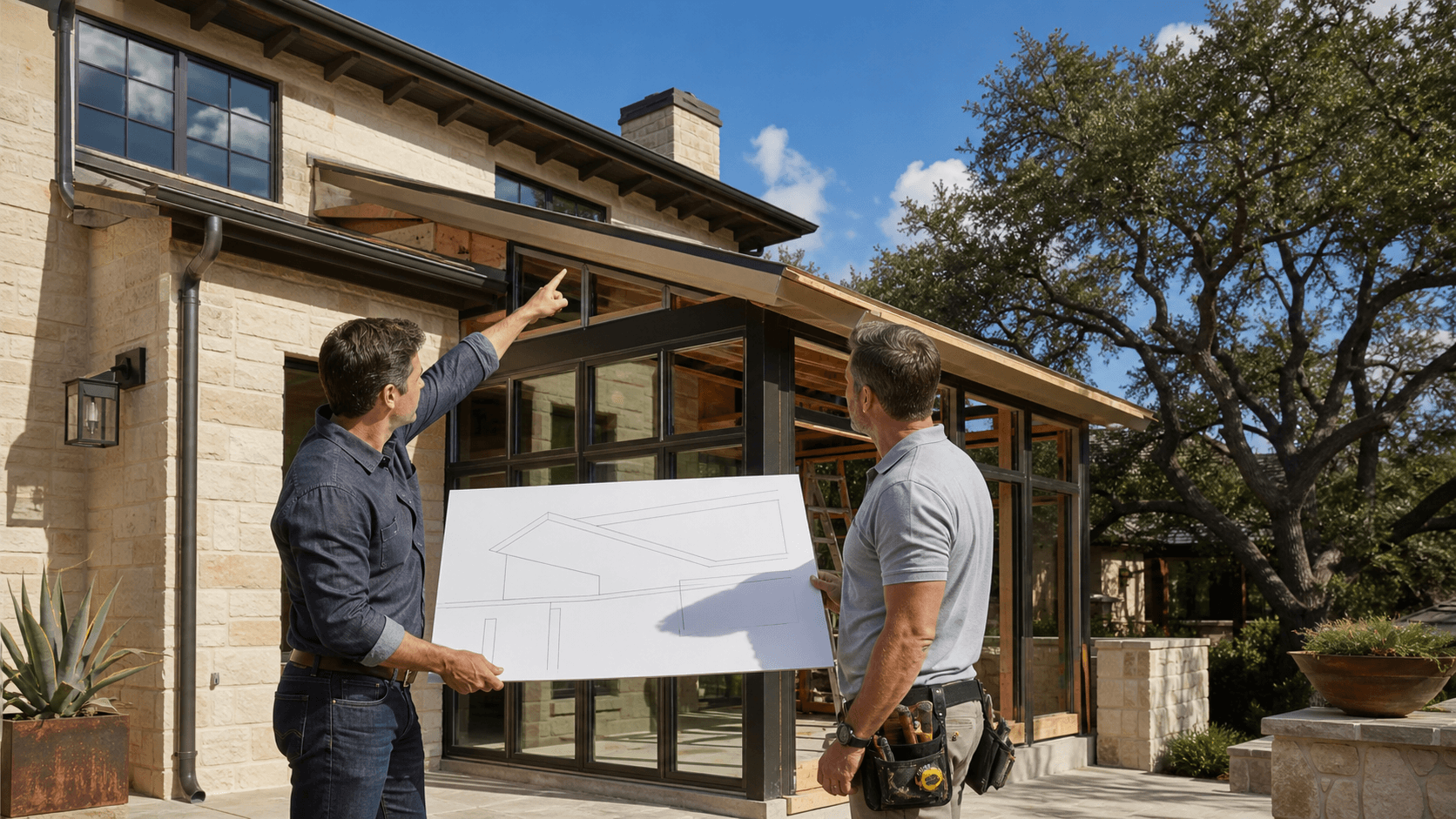
Our role in the early planning stage is to look at the room as a whole. Equipment should match the glass, insulation, shade, size, and intended use of the sunroom. When those decisions are disconnected, comfort problems are more likely to show up after the room is complete.
Plan for Texas Conditions Beyond Late-Summer Heat
By fall, many Texas homeowners are still relying on cooling during the day, even when mornings and evenings start to feel milder. This time of year is a good reminder that sunroom comfort is not only about the hottest summer afternoon. Humidity, seasonal rain, changing sunlight angles, and cool fronts can all affect how the room feels.
A sunroom designed only to fight heat may still feel uncomfortable when outdoor conditions shift. Air leaks, weak insulation, poor glass choices, and an HVAC system that is not matched to the room can become more noticeable as the calendar changes. Planning for a full range of conditions gives you more opportunities to use the space for meals, quiet mornings, family gatherings, gardening, or everyday relaxation.
At Creative Sunrooms, we design custom sunrooms and outdoor living spaces for homeowners across Texas, including San Antonio, Austin, Bryan/College Station, Corpus Christi, the Rio Grande Valley, and surrounding areas. During planning, we encourage you to think about how you want to use the room, since a space used for entertaining may have different comfort needs than one meant for quiet reading or plant care.
The best time to address sunroom heating and cooling is before construction begins. When the glass, roof system, insulation, orientation, shading, and HVAC approach are considered together, the finished room has a better chance of feeling as good as it looks throughout the year.
Enjoy A Sunroom That Stays Comfortable
Creative Sunrooms can help you choose a solid-roof design that supports dependable sunroom heating and cooling in every season. Our team will work with you to create a space that fits your home, comfort needs, and intended use. Contact us to discuss your sunroom project with our team.