Enclosing a porch can turn an underused part of your Austin home into a space you enjoy far more often. Instead of heading inside when the sun feels intense, rain rolls in, pollen settles on every surface, or mosquitoes appear, you can relax behind a layer of protection while still enjoying backyard views and daylight.
A porch enclosure is more involved than adding screens or windows. The best result comes from choosing the right room style, checking the existing structure, planning for comfort, and accounting for permits, utilities, drainage, and the way your family actually lives. Fall is a natural time to consider enclosed porches in Austin, especially as holiday gatherings, football weekends, and backyard evenings put outdoor areas back in focus.
Define How Your New Room Will Serve Your Family
Before we talk about frames, glass, or roof systems, we encourage you to think about the job you want the new space to do. A breezy screen room has different strengths than a glass-enclosed sunroom. One may be perfect for open-air meals and bug-free conversations, while the other can provide more protection from rain, dust, pollen, and changing outdoor conditions.
Your daily routines should shape the layout. A dining area works best with enough room for chairs to slide back and a convenient path to the kitchen. A quiet reading spot may call for comfortable seating, ceiling fans, and a clear view of the yard. If you hope to use the room for hobbies, plants, or work, lighting, outlets, storage, and temperature control deserve attention early in the design process.
As we plan with Austin homeowners, these are a few common uses we discuss:
- A casual sitting room for coffee, reading, or visiting
- A dining area for family meals and holiday gatherings
- A pet-friendly retreat with secure doors and durable flooring
- A hobby, plant, or craft space with useful lighting and storage
- A flexible hangout spot for game days and weekend guests
Who uses the room matters, too. Families with children or pets may want easy-care surfaces and doors that close securely. If you enjoy entertaining, wider openings and a smooth connection to the patio, deck, or backyard can help the enclosure feel like a natural part of the home, not an add-on.
Choose Materials That Handle Austin Weather
Austin asks a lot of outdoor living materials. Long stretches of sun, summer heat, humidity, heavy rain, wind, and spring pollen can all affect how comfortable a porch feels and how much upkeep it needs. We help match the enclosure design to those everyday conditions so you can get more use from the space.
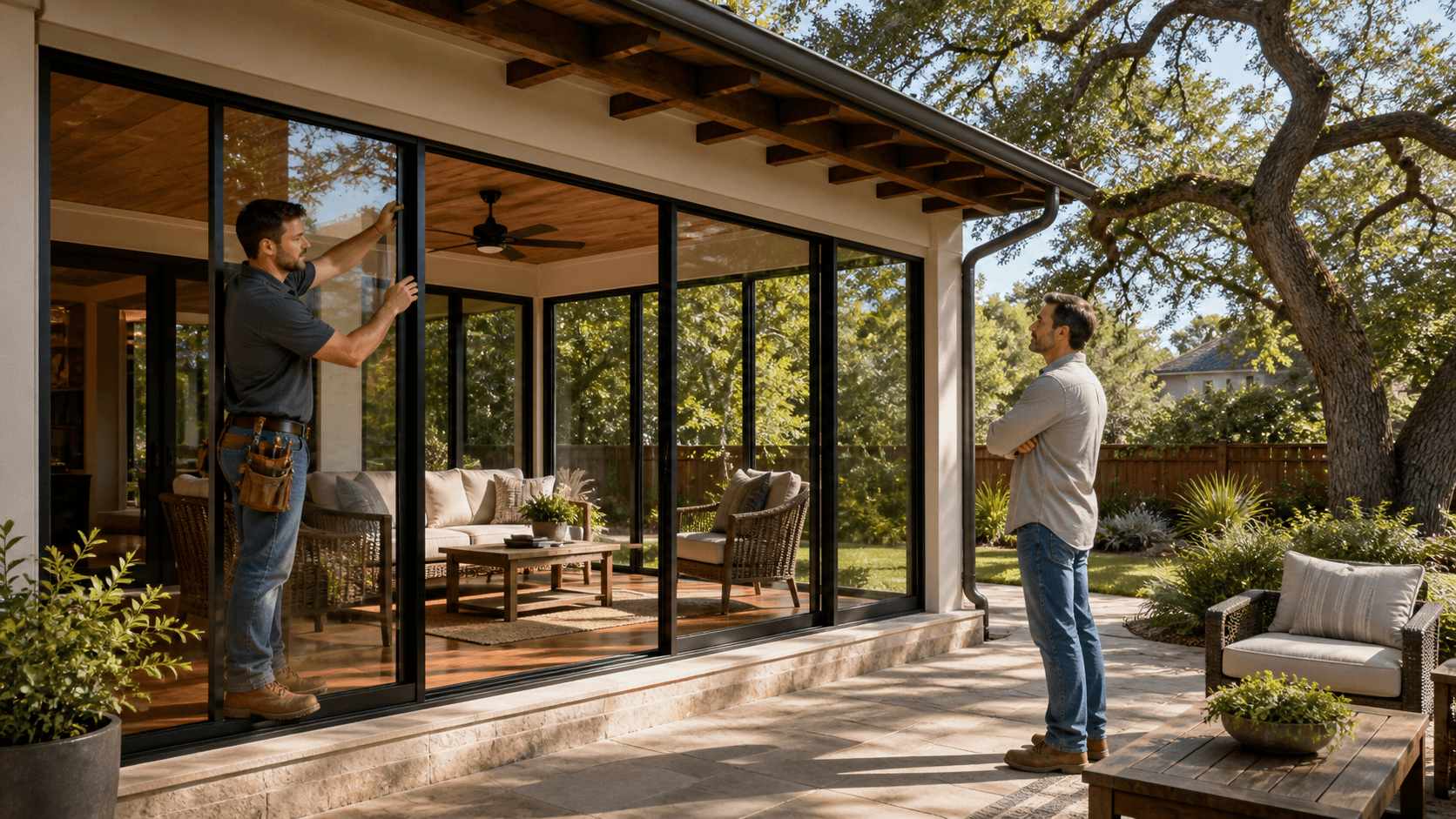
Screen enclosures keep the open-air feeling while helping block insects and drifting debris. Glass patio enclosures create a more protected setting and can reduce exposure to rain, pollen, dust, and outdoor noise. The right roofing, framing, ventilation, and glazing choices can make a noticeable difference when the afternoon sun is at its strongest.
For greater comfort, we may discuss features such as:
- Insulated roof systems that provide more shade overhead
- Energy-efficient windows or solar-control glass
- Ceiling fans for improved air movement
- Shades for bright exposures and added privacy
- Screen and door options that fit how the room will be used
The porch's direction and existing roofline also guide the design. A west-facing space may need more shade than a porch with gentler morning light. An existing covered porch can have different structural needs than an area that requires a new patio cover or roof system. Our goal is to create an enclosure that fits the home's architecture while responding to its particular exposure.
Prepare for Permits, Utilities, and Structural Needs
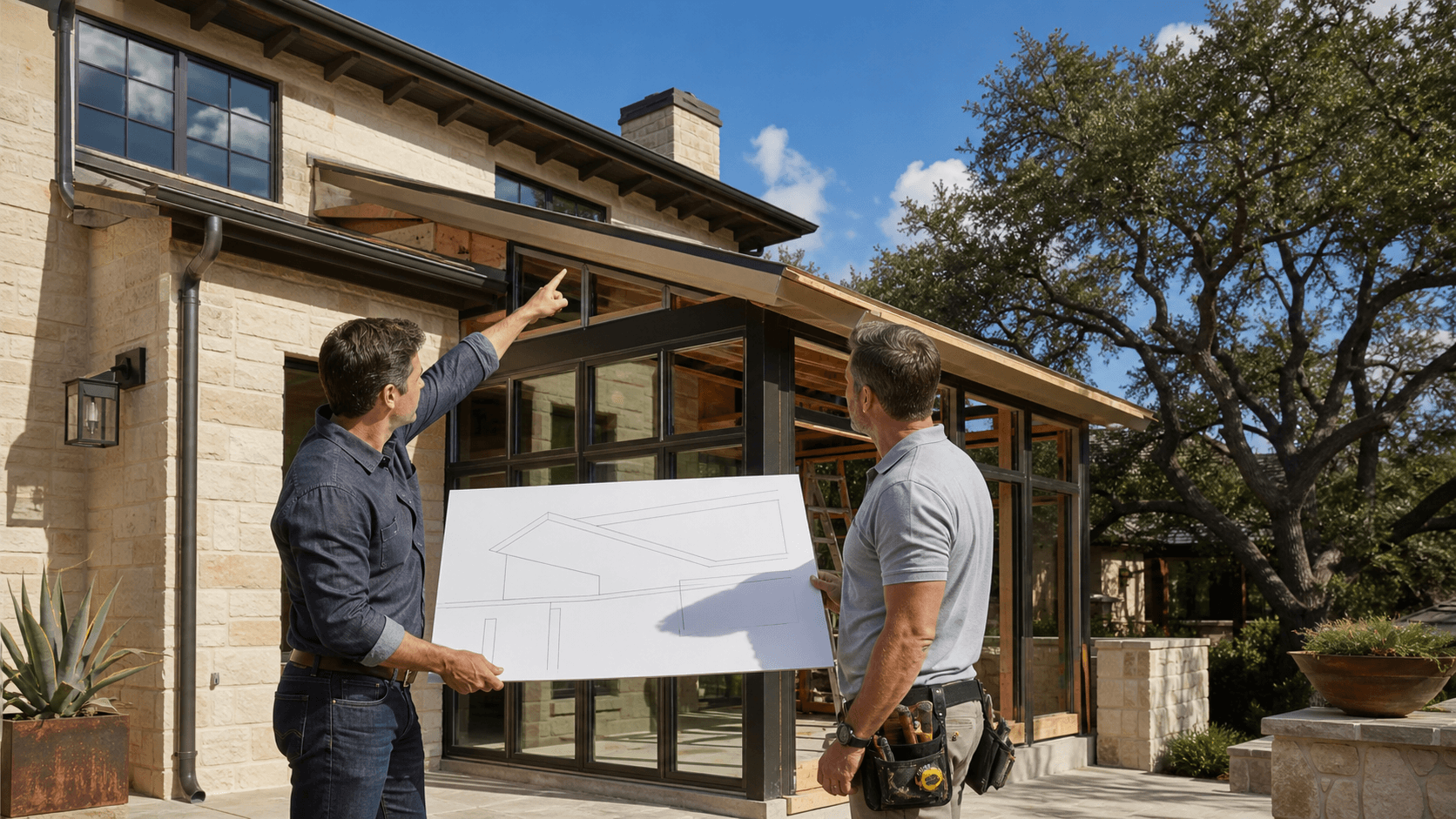
Not every porch is ready for the same kind of enclosure. Before work begins, we review the slab or foundation, roofline, support posts, drainage, and connections to the home. That review helps us spot whether the planned room needs changes to support the new structure safely and properly.
Local requirements are another part of the conversation. Depending on the project, permits, inspections, building codes, HOA guidelines, or added review may apply. Properties in historic areas or flood-prone locations can involve different considerations. We recommend treating these requirements as part of the design stage rather than an afterthought that can interrupt progress later.
Comfort also depends on the details behind the walls and ceiling. Electrical planning may include outlets, overhead lights, ceiling fans, and circuits for features you want to add. A more climate-controlled room may require coordination with heating and cooling professionals. We also look carefully at water management, because rain should move away from both the home and the new enclosure.
Think About Timing and Long-Term Value
The scope of a porch enclosure can vary widely based on the size of the porch, the type of enclosure, roof needs, glass selections, electrical work, structural updates, and custom features. A simple screen room and a fully enclosed glass space are planned differently, which is why an on-site evaluation is the clearest way to understand what your particular porch needs.
October is a good time to start thinking through your choices. Fall brings more backyard meals, gatherings, and time spent outside, making it easier to notice what is missing from your current porch. Beginning the planning process before the spring outdoor-living rush can leave room for design decisions, permitting, material selection, and installation scheduling.
Long-term value is not only about future resale. A well-planned enclosure can make your home feel larger in everyday life. It can give you a sheltered place to watch the yard, host friends, enjoy a meal, or take a break without being chased indoors by bugs, rain, glare, or pollen.
Plan Your Porch Enclosure with a Clear Purpose
Bring your ideas to the planning conversation, including photos you like, notes about how you use the porch now, and a wish list for comfort features. We have spent more than 40 years designing and installing custom outdoor living spaces across Texas, including Austin, and we use that experience to evaluate existing porches and recommend options that suit the home and the people who live there.
The strongest enclosed porches in Austin begin with a simple question: what would make this space more useful for your family? Once that answer is clear, the right enclosure style, materials, layout, and comfort features can come together in a way that feels natural for years to come.
Bring Lasting Comfort To Your Porch
Creative Sunrooms can help you compare designs, finishes, and features for enclosed porches in Austin that suit your home and daily routine. Our team brings practical guidance to each stage, from the initial concept to the finished space. Contact us to discuss your porch enclosure project.