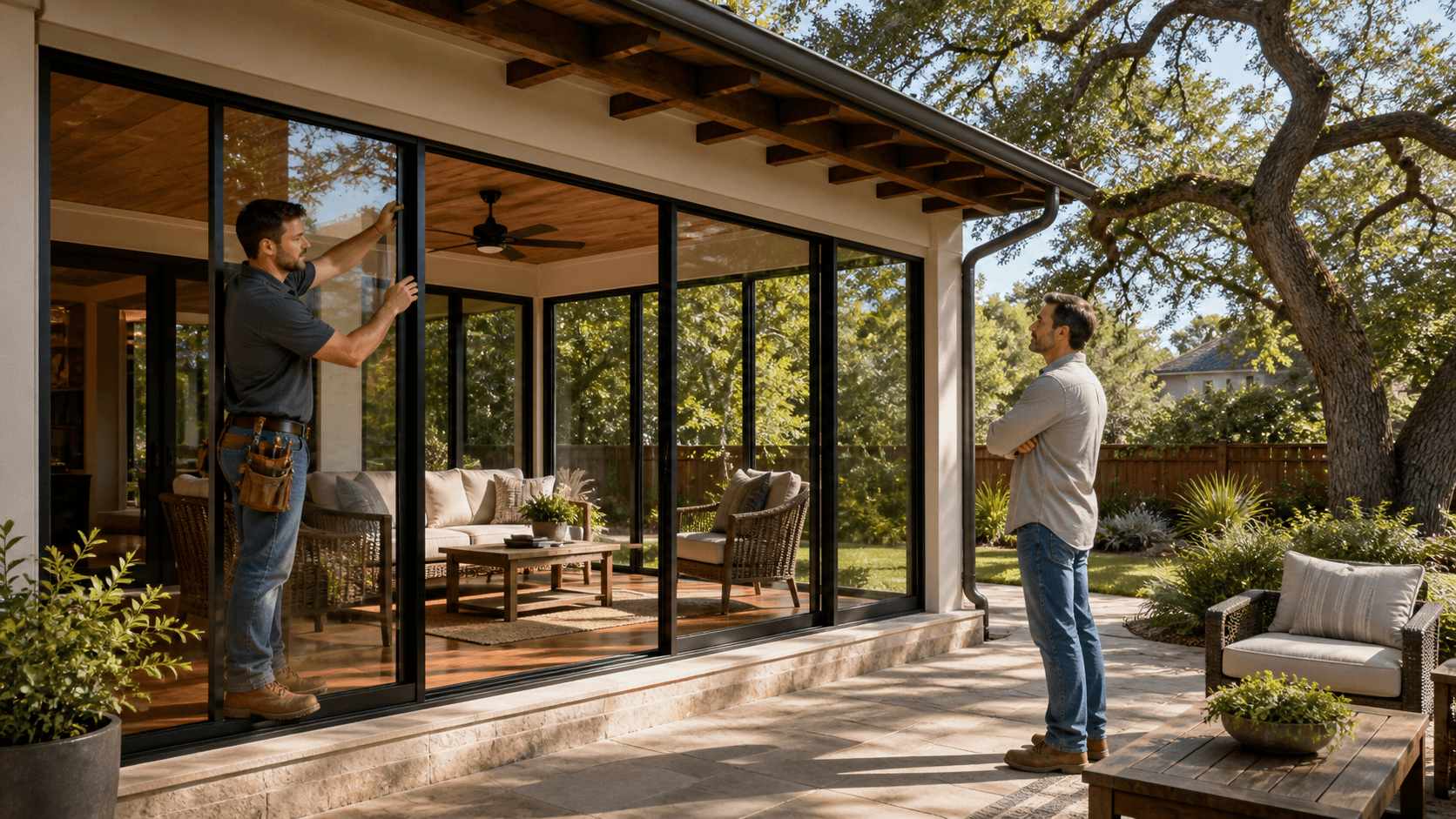
Preparing Sunroom Windows for Cooler Texas Fall Mornings
Cooler fall mornings can make a sunroom feel different from the bright, sunny space you enjoyed all summer. A few seasonal checks can help you keep the room comfortable, full of natural light, and ready for everyday use as the calendar moves toward the holidays.
At Creative Sunrooms, we have spent more than 40 years designing and installing custom outdoor living spaces across Texas. We often see quick temperature changes in San Antonio, Austin, Bryan/College Station, Corpus Christi, the Rio Grande Valley, and surrounding communities, so it makes sense to look over your sunroom windows before stronger fall fronts and rainy days arrive.
Inspect Glass, Frames, and Window Seals
A careful visual inspection is a smart first step for your sunroom windows. Before you make changes to shades or arrange seasonal maintenance, take a close look at each glass panel, frame, screen, lock, and moving window section.
During a cool morning or shortly after a temperature shift, you may notice issues that are easy to miss during a hot afternoon. We recommend watching for drafts around the edges of the window and paying attention to panels that rattle, stick, or do not close securely.
Keep an eye out for signs such as:
- Cracked glass, scratched panels, or damaged screens
- Fogging or condensation between insulated glass panes
- Warped frames, loose locks, or panels that do not align
- Cracked, peeling, or missing exterior caulk
- Moisture marks near frames, sills, or enclosure connections
Fogging between panes can point to a failed window seal. When that happens, the window may not perform as well as it should, and the view can become cloudy. Exterior caulk deserves attention, too. Gaps around the frame can allow cool air, humidity, moisture, and insects into the enclosure.
If you spot any of these concerns, a professional evaluation can help determine whether the issue is limited to a seal or hardware piece, or whether it involves the glass, framing, or a connection within the enclosure.
Keep Seals and Moving Parts Working
Weatherstripping does a lot of quiet work around sunroom windows. Over time, it can flatten, tear, loosen, or collect dirt. Even small gaps may make early mornings feel less comfortable and allow humid air into the room.
Before adding new weatherstripping or sealant, we recommend having any sticking or misaligned windows addressed. A sliding panel that drags along its track or will not lock properly may need adjustment first. Otherwise, new materials may not fit as intended or could make the window harder to operate.
Pay special attention to moving parts, including sliding tracks, latches, locks, and operable panels. Each window should open, close, and lock smoothly. Proper alignment helps the seals do their job while still allowing you to enjoy fresh air when the afternoon feels pleasant.
Not every enclosure uses the same frame material, glass type, or drainage design. Products that work well on one window may not suit another. Sealants also need to be applied carefully, since they can interfere with drainage if placed in the wrong area. Weep holes and drainage channels should stay open, especially during fall rain and humid weather.
Clean Glass and Tracks for Everyday Comfort
Clean sunroom windows make a noticeable difference. Clear glass lets in more sunlight, helping the room feel brighter during the morning hours. It also gives you a better view of your yard, patio, or surrounding outdoor space.
Frames, sills, and tracks can gather a surprising amount of dust, pollen, leaves, and insects after a long Texas summer. That buildup can hold moisture against the frame and prevent a window from closing tightly.
Seasonal window care should include attention to:
- Glass and panels, using nonabrasive materials appropriate for the surface
- Window tracks and sills, where debris can collect
- Screens, which may hold dust or show small tears
- Locks and latches, which should engage securely
- Corners and drainage areas, where moisture may linger
After the windows and tracks are cleaned, test every operable panel. Notice whether it opens smoothly, slides without resistance, and locks in place. Rusted hardware, rough movement, or a track that remains difficult to use may point to a repair need that is best handled by a professional.
Keeping these areas clean does more than improve appearance. It supports daily comfort, helps windows close as intended, and makes small concerns easier to spot before they turn into larger repairs.
Use Flexible Shades for Changing Fall Days
Texas fall weather can be full of surprises. A morning may feel cool and calm, while the afternoon brings strong sunlight and a much warmer feel inside the sunroom. Flexible window treatments give you more control without taking away the open, airy feeling that makes the room special.
Cellular shades, solar shades, blinds, and curtains can each offer a different balance of light control and privacy. Insulated treatments may help reduce overnight heat loss, while solar shades can limit glare and intense afternoon sun. The best choice depends on how your sunroom faces the sun, how often you use the space, and which windows need to remain easy to operate.
We recommend choosing treatments that can be opened during the day and closed when you want a little more comfort in the early morning. Avoid covering vents, drainage paths, or windows that need regular access. Shades should support the design of the enclosure, not trap moisture or make routine care harder.
For a custom sunroom, professionally selected shade options can complement the room's style while helping you manage changing light throughout the season.
Plan a Fall Sunroom Check
A fall check of your sunroom windows can help you catch drafts, moisture concerns, worn seals, and stubborn hardware before they interrupt your enjoyment of the space. Looking at the glass, frames, tracks, locks, weatherstripping, caulk, and shades gives you a clear picture of what may need attention.
A little care now can keep your sunroom bright, comfortable, and easy to use through changing fall days. When a window does not close correctly, shows fogging between panes, or has visible damage, professional guidance can help protect the enclosure and preserve the comfort of the room.
Enjoy Clearer Views And Lasting Comfort
Creative Sunrooms can help you compare options for sunroom windows that support comfort, clarity, and dependable operation. Our team can help you choose features that fit your enclosure and everyday needs. Contact us to discuss your project with our team.