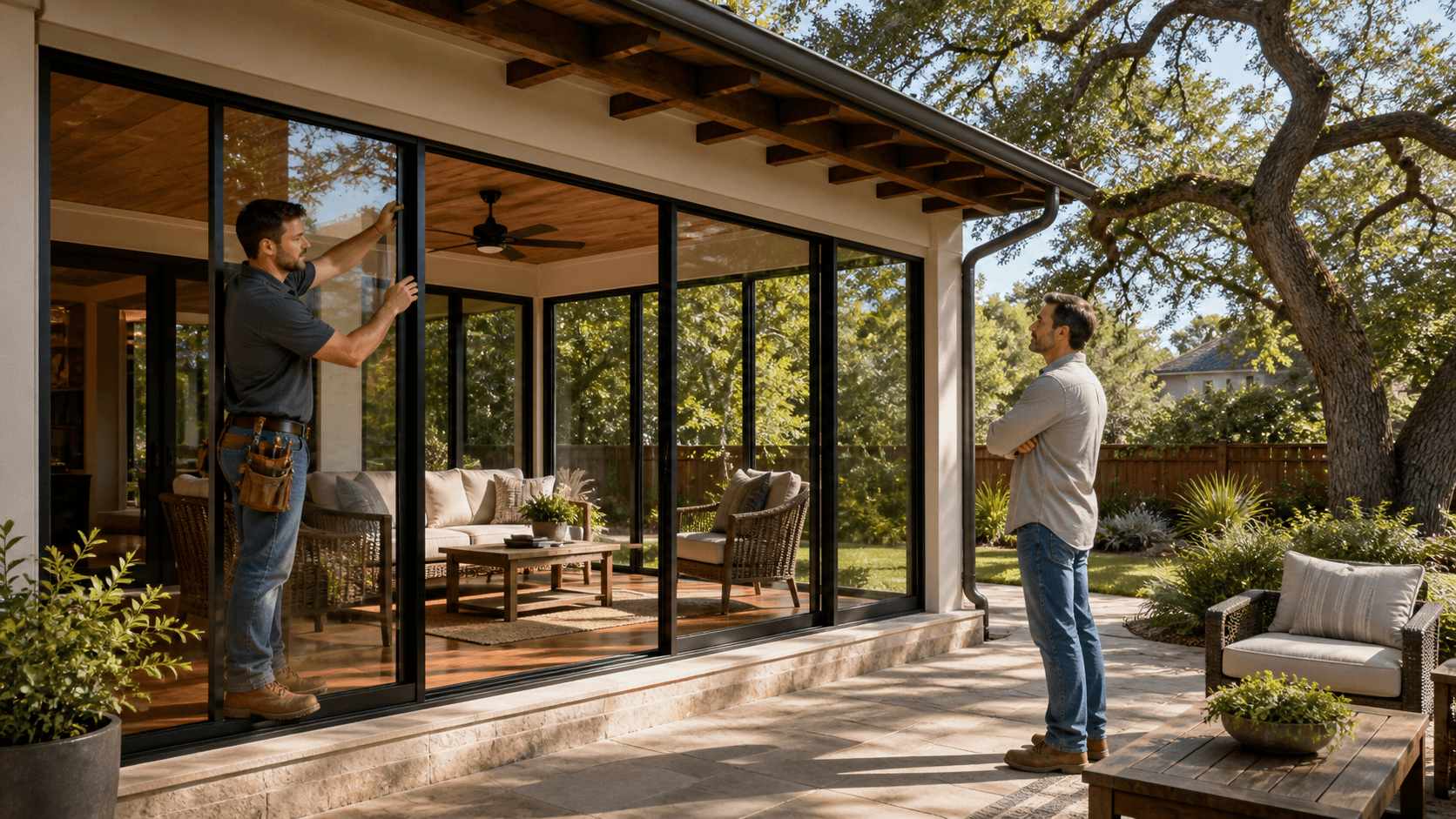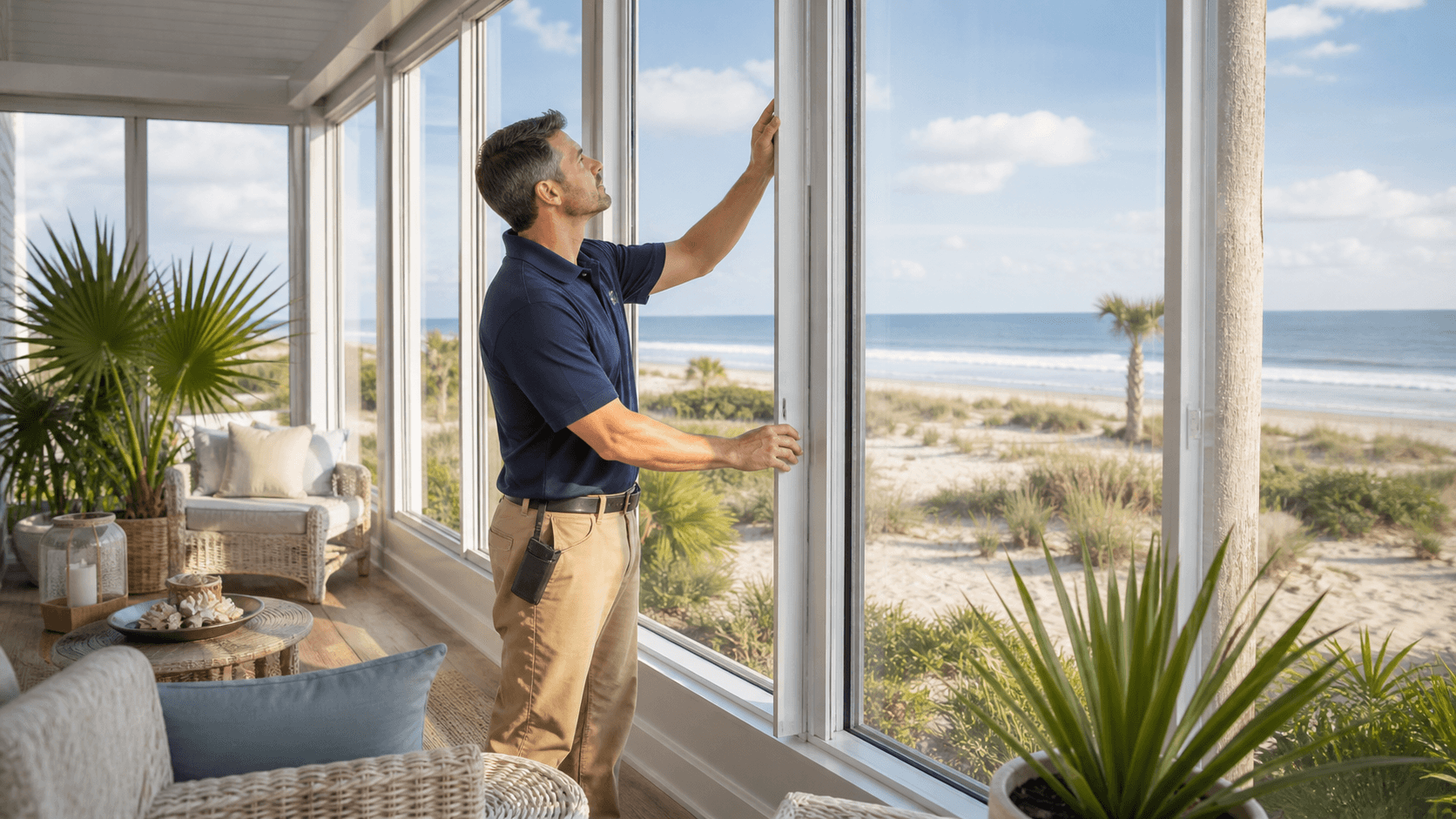
Enjoy Open-Water Views Through Every Texas Season
Coastal sunroom design should protect the view you love without ignoring the tough conditions around it. Salt air, wind, humidity, bright sun, and sudden rain can all affect how a sunroom looks and feels over time. With the right plan, your room can frame a bay, beach, marsh, or waterfront while giving you a comfortable place to relax, host friends, or enjoy a quiet morning.
At Creative Sunrooms, we design custom outdoor living spaces for Texas homeowners across Central, South, and Coastal Texas. Along the coast, a beautiful wall of glass is only part of the picture. Materials, connections, ventilation, drainage, and ongoing care all matter when you want a room that stands up to its surroundings. Here is what we consider when planning for salt, wind, heat, humidity, and fall maintenance.
Choose Salt-Smart Materials From the Start
Salt does not stay neatly at the shoreline. Windy days and storms can carry salty moisture farther inland than many people expect, which means coastal sunroom design begins with the less-visible parts of the structure as much as the finished glass and framing.
We recommend asking about every component that will face exterior exposure, including the small pieces that are easy to overlook. A polished-looking room can still have trouble down the road if its hardware, fasteners, or tracks are not suited to a damp, salty environment.
Materials worth discussing with your sunroom professional include:
- Corrosion-resistant aluminum framing
- Properly finished metal components and roof connections
- Exterior-rated screws, anchors, handles, and door hardware
- Durable seals, tracks, and weatherstripping
- Screen mesh and frame systems made for outdoor exposure
Glass choices matter, too. Depending on the room's direction and how much direct sun it receives, certain glass options can help manage glare and heat gain while preserving a clear view outside. For a screen room, we consider mesh strength, insect protection, airflow, and how the frame system will perform in coastal humidity.
Every property has its own exposure level. Distance from the water, prevailing winds, nearby buildings, trees, and landscaping all affect the design. A room facing open water may need a different approach than one tucked behind a dune, fence, or row of mature trees.
Build a Wind-Ready Room Around the View
Expansive views are often the reason for adding a sunroom, but wide glass areas need thoughtful structural planning. Along the Texas coast, weather can shift quickly, and hurricane season continues through November. October is a good time to think about whether an existing enclosure is prepared for high winds and heavy rain, or whether a planned addition is being designed for the site.
Our goal is to create open sightlines without treating the room like a simple glass box. The framing system, roof design, anchoring, and connections to the existing home need to work together. That planning helps the sunroom feel open and inviting while respecting the conditions it may face.
Local code and permitting requirements can vary by community, wind zone, and property location. When site-specific engineering is needed, it should be part of the project conversation early on. We help you understand the design factors that apply to your home rather than relying on a one-size-fits-all enclosure.
Water management deserves the same attention as wind readiness. Coastal downpours can test every seam and connection, so roof slope, flashing, gutters, and drainage paths should be planned with care. These details are not always the first things guests notice, but they help protect the sunroom, adjacent patio, and foundation from unwanted water.
Plan for Heat, Humidity, and Fresh Air
A coastal room should be enjoyable on more than the mildest days. Direct sunlight and high humidity can make an enclosure feel stuffy when ventilation and shade were treated as afterthoughts. We bring those comfort questions into the design conversation from the beginning.
The right type of enclosure depends on how you plan to use it. A screen room offers fresh air and a strong connection to the outdoors. A patio enclosure provides greater separation from insects and wind-driven rain. An insulated glass sunroom can offer a more protected extension of your living area, with comfort needs considered as part of the overall design.
Useful features may include:
- Operable windows or sliding doors for natural airflow
- Ceiling fans to keep air moving
- Screened openings that welcome breezes while limiting insects
- Access points placed to support cross-ventilation
- Glass and shade options matched to sun exposure
Placement matters. When weather allows, openings positioned to catch prevailing breezes can make the room feel much more comfortable. For enclosed rooms, we also discuss how heating and cooling needs will be addressed, especially if you want to use the space often.
Shade is another part of the comfort plan. Roof design, glass selection, interior shades, exterior shading, and nearby trees can all help reduce direct sun. Because the sun's angle changes over the year, a space that feels pleasant in spring may need more shade control during late summer and early fall.
Plan October Care Before Late-Season Storms
October is a smart time to inspect a coastal sunroom before the calendar moves toward the holidays and late-season storms. Regular care helps preserve finishes, maintain clear views, and catch small problems before they become larger repair concerns.
Salt buildup is one of the simplest things to manage consistently. We recommend rinsing exterior framing, screens, glass, tracks, and hardware with fresh water as needed. Always follow manufacturer guidance, and avoid harsh cleaners or abrasive tools that could damage finishes, seals, or glass.
During a seasonal inspection, look closely at doors, windows, screens, seals, gutters, roof connections, and drainage areas. Sticking doors, worn weatherstripping, loose hardware, damaged mesh, clogged gutters, and signs of water intrusion are all worth addressing promptly with a qualified professional.
The area around the room matters as well. Trim branches that may rub against the structure in strong winds, clear debris from patio surfaces, and keep drainage paths open. Fall can also be a useful time to begin planning an upgrade, giving you time to make design decisions before busy spring installation schedules arrive.
Turn Your Coastal View Into a Lasting Outdoor Room
The best coastal sunroom design does more than add enclosed space. It protects the way you experience your favorite view, whether that means sunrise over the water, birds in the marsh, or an evening breeze off the bay. Salt-smart materials, wind-aware construction, practical ventilation, and regular upkeep all help the room stay inviting.
Before choosing a design, think about how you use your patio or waterfront space, what sightlines you want to preserve, and which conditions affect your property most. A tailored plan gives those details the attention they deserve, creating an outdoor room that feels connected to the Texas coast while prepared for life beside it.
Enjoy Lasting Comfort With a Smarter Sunroom
Creative Sunrooms can help you choose a coastal sunroom design that pairs dependable overhead protection with the light and views you value. Our team will help you compare options that suit your home, lifestyle, and coastal exposure. When you are ready to discuss your project, contact us for a personalized consultation.