Beat the Texas Heat with Smarter Sunroom Floors
Sunroom flooring in Texas has a hard job. It sits in direct sunlight, takes on AC from inside, heat from outside, and still has to look good every day. If the wrong floor goes in, the room can feel hot, sticky, or faded long before it should.
The right sunroom flooring can handle all that. It can stay cooler under bare feet, resist fading, and keep from warping when the temperatures jump. It also helps your sunroom feel like a true part of your home, not just an old patio with walls around it.
Our team has been working on Texas sunrooms for many years, so we see what really holds up in the sun and what fails too soon. In this guide, we will walk through how heat affects flooring, the best material choices, common mistakes, and simple design ideas that keep your sunroom comfortable year-round.
What Texas Heat Really Does to Sunroom Floors
Texas sun is strong, especially on south- and west-facing rooms. All that light might look pretty, but it can be rough on floors.
Here is what happens when flooring is not made for this kind of exposure:
- UV rays break down finishes and lighten colors
- Heat makes some materials expand and contract too much
- Moisture, dust, and tracked-in rain can soak into seams or weak spots
Over time, you can start to see:
- Fading where the sun hits hardest
- Buckling or wavy boards near doors and windows
- Gaps between planks or tiles
- Stains that never quite clean up
AC, ceiling fans, and window shades help a lot, and we always recommend planning for them. But they cannot fully protect flooring that just is not meant for sunrooms. The floor itself needs to be made to handle heat, UV, and a semi-outdoor feel, or else you are constantly fighting problems instead of enjoying your space.
Top Sunroom Flooring Materials That Handle Texas Summers
Some flooring choices naturally do better in a Texas sunroom than others. These are the ones we lean on again and again when we want long-lasting results.
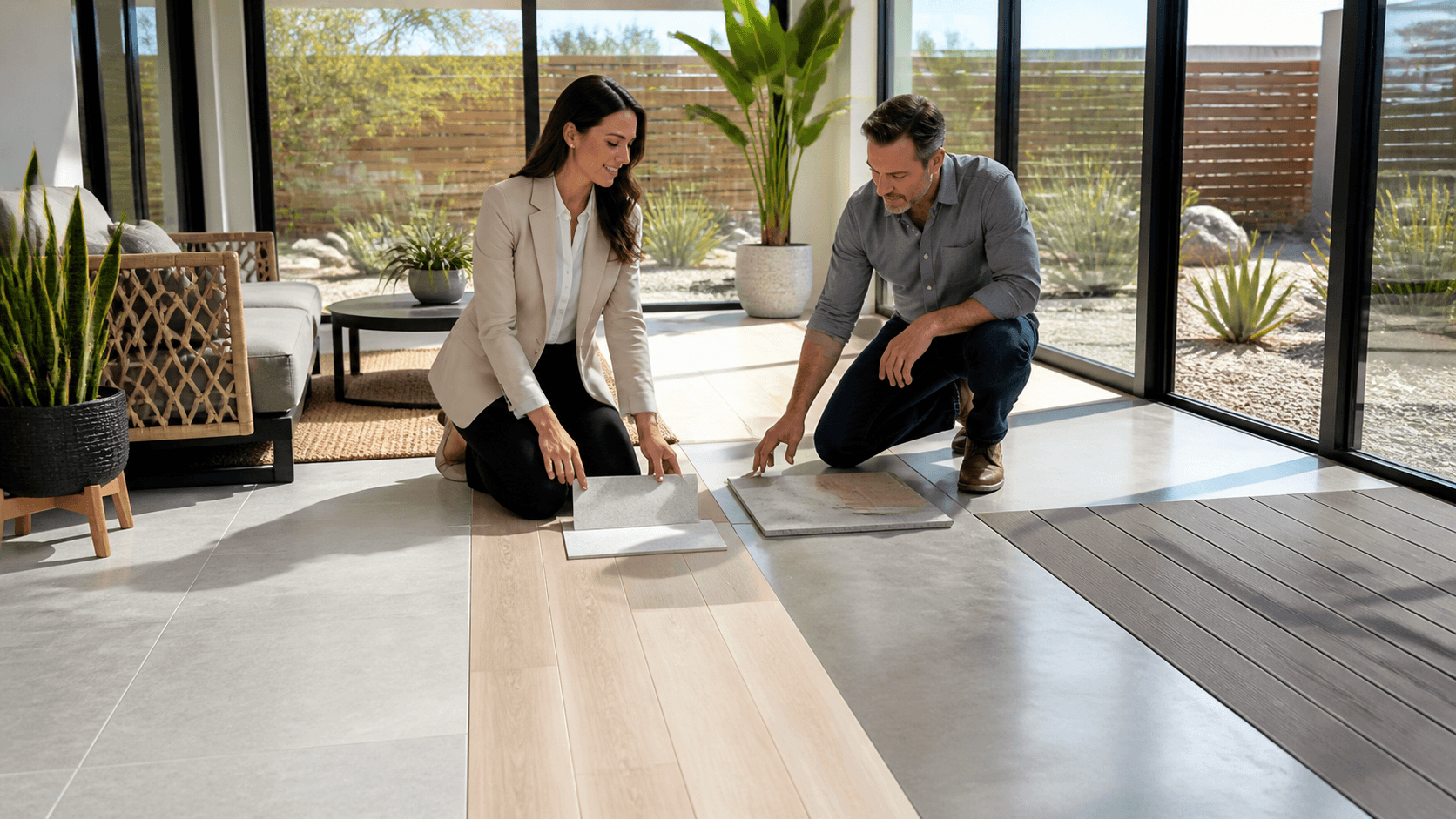
Porcelain and Ceramic Tile
Tile is one of the best choices for hot climates. It is dense, hard, and holds up well in direct sun.
- Stays relatively cool underfoot, even on bright afternoons
- Resists fading and discoloration
- Handles water from plants, spills, and tracked-in rain
- Comes in styles that look like wood, stone, or concrete
With the right grout and layout, tile can feel like a true extension of your indoor flooring while still being tough enough for a patio-style space.
Luxury Vinyl Plank and Tile
Luxury vinyl made for high-heat and high-UV areas can be a smart option when you want a warmer, softer feel than tile.
Benefits include:
- More comfortable to walk on for long periods
- Quieter than hard tile, nice for TV rooms or play areas
- Compatible with many existing concrete slabs when installed by pros
- Available in many realistic wood and stone looks
It is important to choose products that are clearly rated for sunrooms and strong UV exposure. Not all vinyl is the same, so this is where expert guidance really helps.
Engineered Wood
If you love the look of real wood, engineered wood can sometimes work in a sunroom when it is chosen and installed carefully.
Look for:
- Products rated for temperature swings
- UV-resistant finishes to slow down fading
- Professional installation with correct expansion gaps
This is not a good match for every sunroom, especially ones that get extreme direct light all day, but for some spaces it balances style and performance.
Concrete and Stained Concrete
A simple concrete slab does not have to feel plain. With staining or scoring, it can look stylish and be very practical.
- Very durable in both heat and the rare cooler snaps
- Easy to sweep and mop
- Takes color well for a custom look
- Works nicely with indoor/outdoor rugs for softer zones
Concrete can be a smart base when you want something low-maintenance that still looks clean and modern.
Flooring Mistakes to Avoid in Texas Sunrooms
Just as some materials shine in sunrooms, others almost always cause headaches in Texas conditions.
Solid Hardwood and Standard Laminate
Traditional hardwood and many laminate products are usually poor choices in sunrooms.
Common problems:
- Warping and cupping from heat and moisture
- Rapid fading in direct UV
- Seams that lift or chip
Interior-Grade Carpet
Wall-to-wall indoor carpet might feel soft at first, but in a sunroom it can:
- Trap heat and make the room feel warmer
- Hold on to moisture from shoes or sliding doors
- Develop odors or mildew in damp spots
Low-Quality Vinyl and Peel-And-Stick Tiles
These may sound easy, but they rarely last in strong sun.
You can see:
- Curling edges
- Discoloration where the sun is brightest
- Soft spots where adhesive gives out in the heat
DIY Installs Without Proper Prep
Even good materials can fail if installed wrong. Common DIY issues include:
- No moisture barrier on top of concrete
- Not enough room for expansion
- Wrong adhesives for high heat and UV
In a sunroom, the details matter. Professional planning and installation help protect your investment.
Designing for Comfort, Coolness, and Safety Year-Round
Once you pick the right type of floor, small design choices can make your sunroom feel even better day after day.
To keep floors feeling cooler and more comfortable:
- Choose lighter colors that reflect more light
- Pick matte or low-sheen finishes to cut glare
- Use tile or concrete for natural thermal mass
If your sunroom connects to a pool or backyard, safety should be part of the plan too. Look for slip-resistant textures and finishes, and low-profile transitions where the sunroom meets the main house or patio so nobody trips.
Some homeowners like to layer in comfort with indoor/outdoor rugs. These are great for:
- Softening seating areas in cooler months
- Protecting the main floor from chair legs and heavy furniture
- Adding color without committing to a bold permanent floor
We also think about how the new flooring ties into the rest of your home. Matching or coordinating textures and tones with nearby rooms, plus window frames and patio doors, can make the entire space feel larger and more connected.
How Creative Sunrooms Tailors Flooring to Your Space
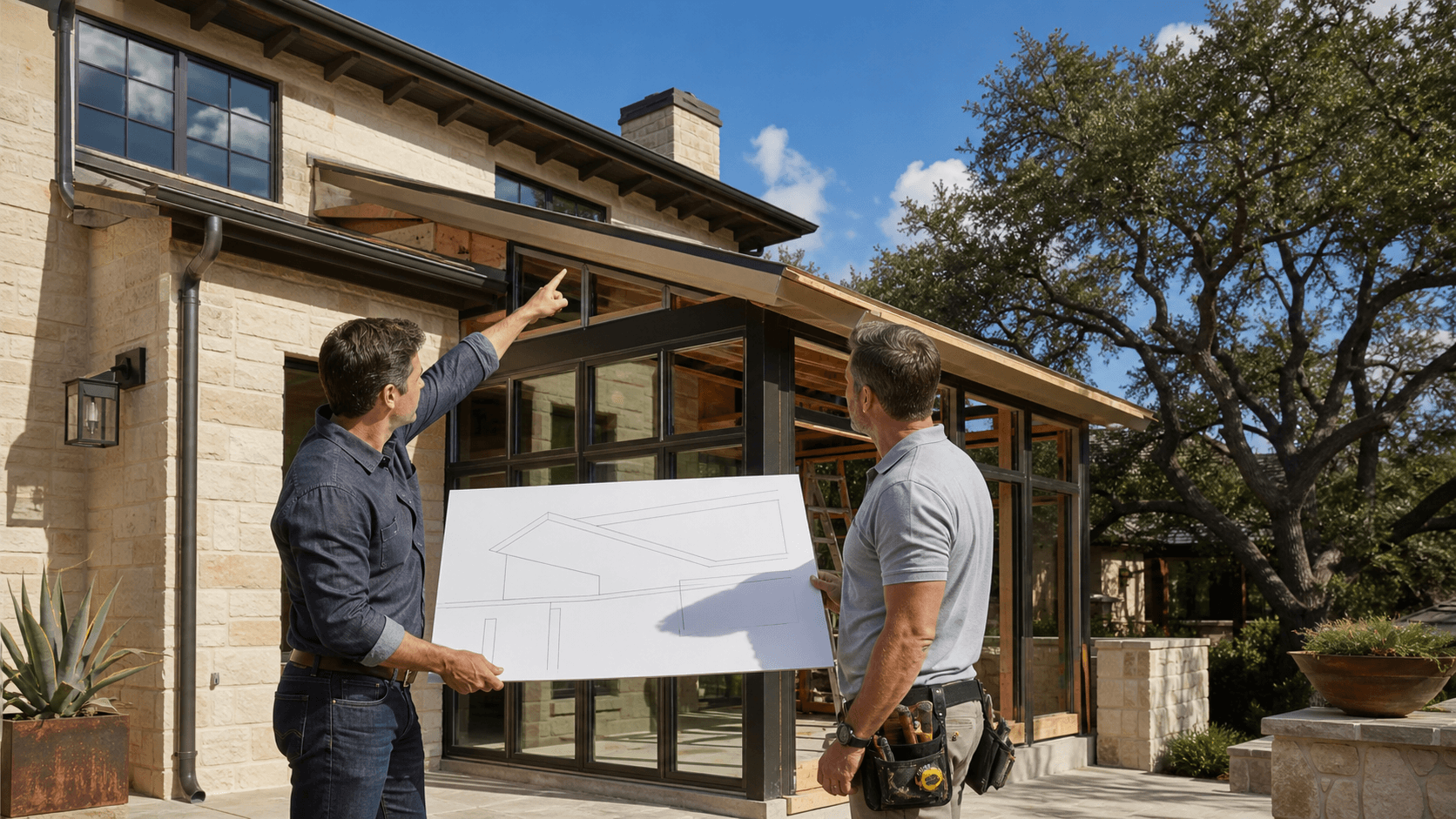
At Creative Sunrooms, we do not treat flooring as an afterthought. When we plan a new sunroom or patio enclosure, we look at several details before suggesting any flooring options.
We study:
- How the sun moves across your space each day
- Which direction your sunroom faces
- The condition of your existing slab or patio
- How you want to use the room: reading nook, office, plant space, or family hangout
- Your style preferences and maintenance comfort level
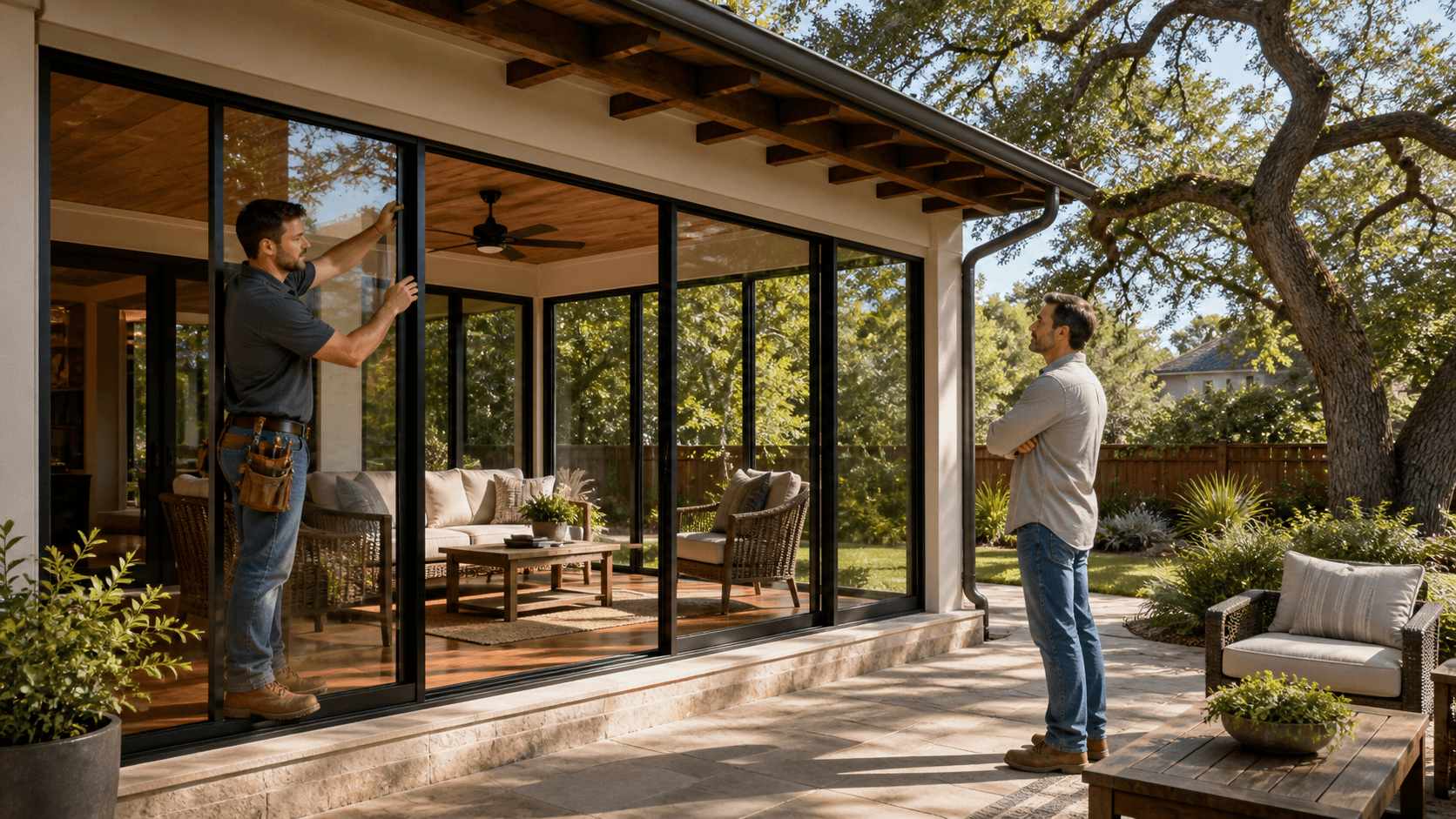
Because we design and build the entire sunroom, we can match flooring with the structure, insulation, and glass you choose. That way, everything works together for better comfort and durability.
We focus on finishes that are known to perform in Texas conditions, so you are not testing unproven products in harsh sun. Seeing real samples and photos of past projects helps you compare how different materials look and feel in actual sunrooms, not just in a showroom.
As fall events, holidays, and family visits start filling the calendar, this kind of thoughtful planning can turn an underused patio into a favorite indoor/outdoor room that is ready for every season.
Get Started With Your Project Today
Transform your space with sunroom flooring that is both beautiful and built to handle everyday life. Explore our curated selection of sunroom flooring options to find the perfect fit for your home and lifestyle. At Creative Sunrooms, we will guide you through materials, design, and installation so the process feels straightforward from the first idea to the final walk-through. If you are ready to talk details or schedule a consultation, contact us today.