Keep Your Texas Sunroom Cool, Bright, and Truly Usable
A sunroom should be the best seat in the house, not the hottest. In Texas, many homeowners find that a beautiful glass room feels great at 9 a.m., then turns into a sweat box by early afternoon. The view is amazing, but the heat, glare, and sticky air make it hard to enjoy.
The good news is, it does not have to be that way. With the right mix of Low-E glass, solar screens, fans, and smart roof overhangs, a weatherproof sunroom can stay bright and comfortable almost all year, without sending your AC into overdrive. At Creative Sunrooms, we design every room around Texas heat, sun, humidity, and those sudden storms that like to show up out of nowhere.
In this article, we will walk through how each part works, when to combine them, and what matters most in our climate. By the end, you will have a clear idea of how to improve an existing room or plan a new one before the next long, hot stretch hits.
Why Texas Weather Demands Smarter Sunroom Design
Texas gets a lot of strong sun, for a long part of the year. Glass walls and roofs can soak up that energy like a greenhouse. When the sun is high and the angle is harsh, especially on west and south sides, heat pours through the glass and gets trapped inside.
That creates a few common problems:
- Rooms that feel 10 to 15 degrees hotter than the rest of the house
- Glare that makes it hard to read, relax, or watch TV
- AC that runs longer but still cannot keep up
Most home HVAC systems were not planned for a big glass room added later. Long duct runs, too few returns, and all that extra sun can overwhelm a system that was sized for the original house. If you only try to fix the problem with more cold air, you often end up with high bills and only minor comfort.
A better plan is simple: keep as much heat as possible out of the room in the first place, then move warm air out quickly. That means:
- Smarter glass that controls heat without darkening the room
- Exterior shading that stops the worst sun before it hits the glass
- Airflow and vents that let hot air rise and leave
When this is done correctly, a weatherproof sunroom does more than just keep wind and rain away. It stays usable across long, hot months and through fast-changing weather.
Low-E Glass Choices That Fight Heat Without Killing the View
Low-E glass is the starting point for a comfortable Texas sunroom. In simple terms: Low-E means there is an invisible coating on the glass. It helps reflect heat energy while still letting in natural light, so the room feels open without feeling like a greenhouse.
There are different levels of performance, and which direction the glass faces matters. For many sunrooms, we look at it like this:
- West and south walls and roofs often need higher solar control to cut heat and glare during peak sun
- East walls can use a balanced approach that softens morning heat but keeps the space bright
- North walls usually get softer light, so they may not need the strongest solar blocking
When you talk glass options, there are three simple terms to know:
- Solar Heat Gain Coefficient (SHGC): how much solar heat passes through the glass. Lower means less heat.
- U-factor: how easily heat moves through the glass. Lower means better insulation.
- Visible Light Transmittance (VLT): how much natural light comes in. Higher means a brighter room.
The trick is choosing combinations that fit the room layout, roof style, and how you plan to use the space. With the right Low-E setup, the sunroom feels bright, your AC does not have to work as hard, and furniture and floors are better protected from fading.
Solar Screens, Shades, and Roof Overhangs That Block the Burn
Low-E glass is powerful, but Texas sun can still be intense. That is where exterior solar screens and shading come in. When you block sunlight before it hits the glass, you stop a lot of the heat from entering at all.
Some common options include:
- Fixed solar screens for the hottest walls
- Operable shades that can roll up when the sun is softer
- Integrated shading built into the design from day one
Exterior shading often works better for summer comfort than interior-only blinds. Interior shades can help with glare, but by the time sun hits them, much of the heat is already inside the room.
Roof design also plays a big role in comfort:
- Properly sized overhangs help block high summer sun but let in lower sun angles when the sun is not as intense
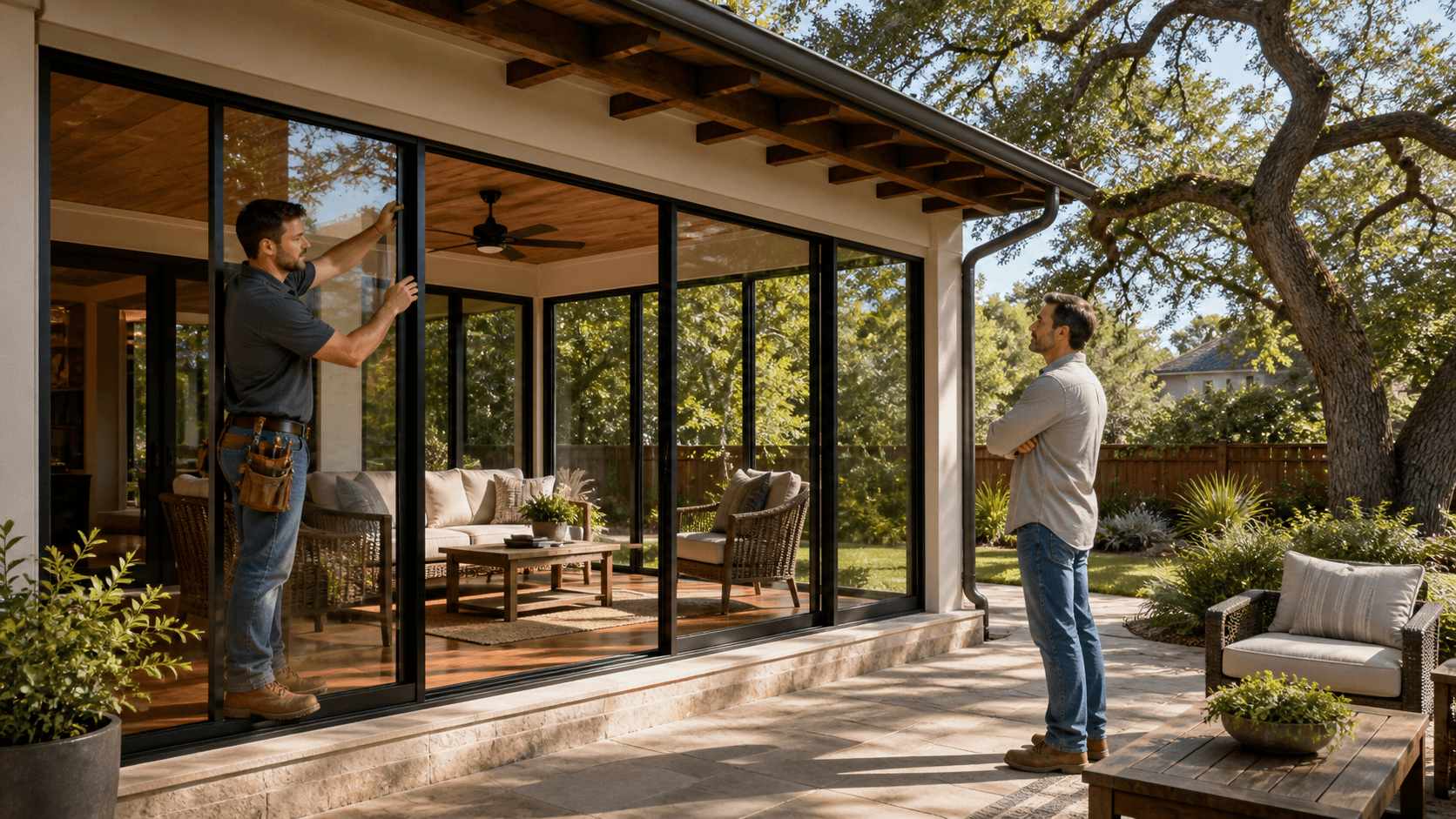
- Extended eaves, covered patios, and pergola-style structures can shield tall glass walls and doors
- Thoughtful placement of solid and glass roof sections can control where direct sun hits inside the room
The goal is balance. You want that open, outdoor feel, but you do not want a sharp beam of west sun cooking your favorite chair every afternoon. Good shading design softens the harshest light while keeping your views and natural daylight.
Fans, Vents, and Airflow That Help Your AC Breathe Easy
Even with good glass and shading, air movement is still your best friend in a Texas sunroom. When air moves across your skin, it can feel several degrees cooler, even if the thermostat stays the same. That means you can stay comfortable without forcing the AC to run nonstop.
We think about airflow in a few ways:
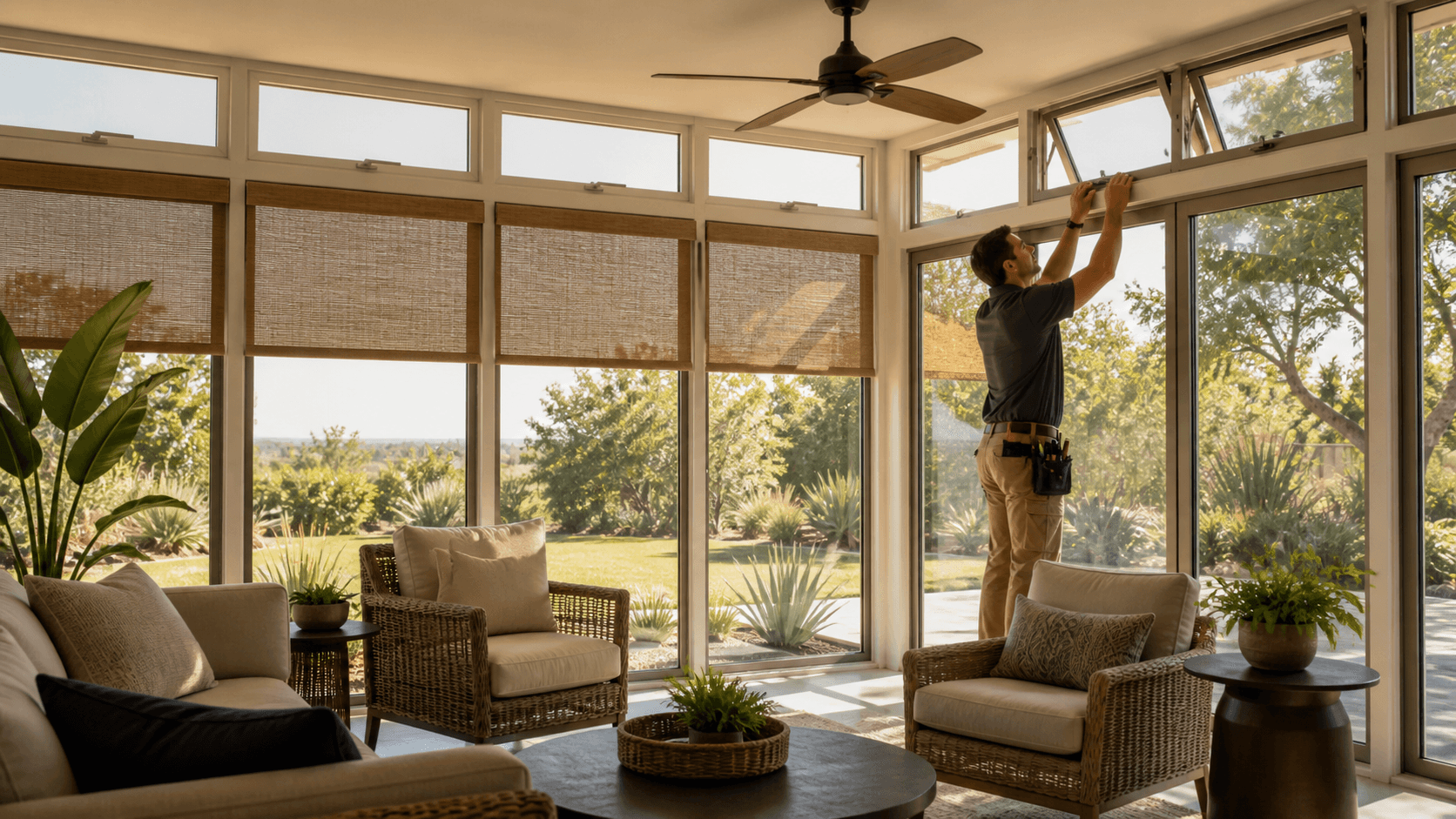
- Ceiling fans to keep air moving and make the room feel cooler
- Operable windows placed low and high to let cooler air in and hot air out
- Transom windows or passive vents near the top of tall walls where heat collects
In long or L-shaped rooms, one fan is usually not enough. Multiple fans, spaced along the room, help avoid hot spots and dead air.
AC planning also matters. Sometimes it makes sense to tie the sunroom into the home system; other times, a ductless mini-split unit is a better fit. Either way, proper sizing, supply vents, and return air paths are key in a room with a lot of glass. When AC and airflow work together, the room feels steady and calm, not stuffy and uneven.
Designing a Weatherproof Sunroom That Works All Year in Texas
The real magic happens when all these pieces are planned together from the start. Low-E glass, solar screens, roof overhangs, and fans work best as one system, not as random add-ons.
Across the year, your needs shift a bit:
- Late summer and early fall, you rely more on solar screens, shades, and steady fan use
- When the sun angle changes, overhangs help control direct rays while still keeping the room bright
- During stormy seasons, well-built screens, windows, and roof details help the room stand up to wind and heavy rain
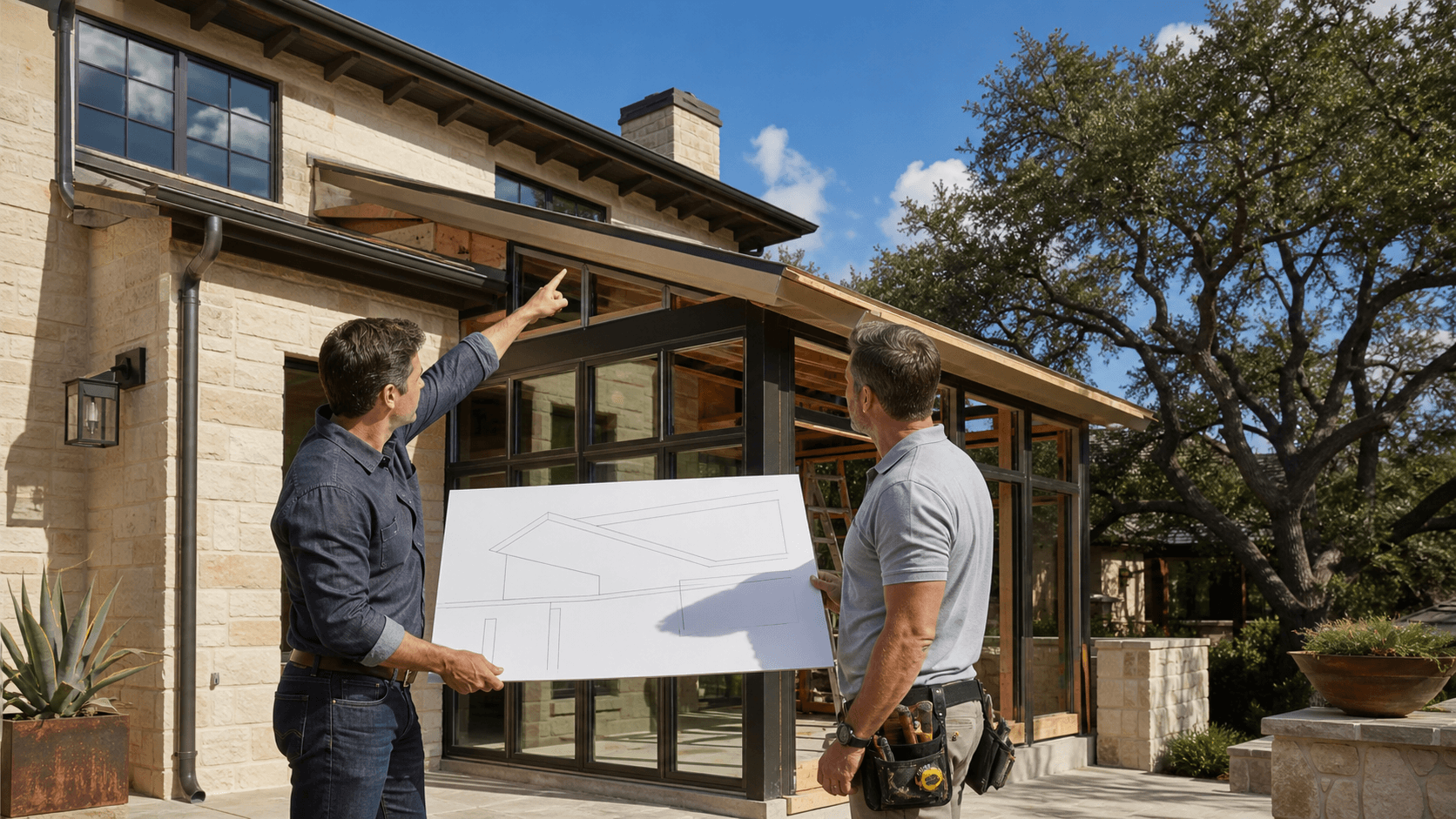
At Creative Sunrooms, we look at every home individually. Orientation, nearby trees, neighboring houses, and how your family wants to use the room all matter. Some people want a reading nook that feels quiet and soft; others want a plant-friendly space or a big gathering area. The right design keeps those goals in mind while still planning for Texas heat and sun so the room stays inviting and usable.
Get Started With Your Project Today
Transform your outdoor space into a room you can enjoy in every season with our custom-designed weatherproof sunrooms. At Creative Sunrooms, we work closely with you to create a solution that fits your home, lifestyle, and budget. If you are ready to explore design options or ask questions, contact us to schedule a no-obligation consultation.