How Patio Covers in Austin Handle Late-Summer Rain Runoff
Late-summer rain can arrive quickly in Austin, turning a hot, dry afternoon into a heavy downpour with little warning. When that rain hits a patio roof, it needs a clear path away from your outdoor space, exterior walls, and foundation. We design custom patio covers in Austin with more than shade in mind, considering roof slope, gutters, drainage routes, and the layout already in place around your home.
Short bursts of hard rain can send a surprising amount of water across concrete, planting beds, walkways, and low areas of the yard. A well-planned cover helps control that flow, protecting the covered patio and helping nearby outdoor features stay more usable after a storm.
Why Late-Summer Downpours Need Smart Drainage
After a long stretch of Texas heat, soil can become dry and compacted. Instead of soaking in quickly, sudden rainfall may travel across the surface, following the easiest path downhill. That path can lead straight across a patio, into a flowerbed, or toward the home if the area was not planned with drainage in mind.
We often look at how water already moves across a property before designing a patio cover. Even a smaller rain event can cause trouble when roof runoff is concentrated in the wrong spot. Water pouring off one roof edge may leave muddy patches, wash away soil, or splash against the home's exterior.
Unmanaged runoff may lead to concerns such as:
- Standing water on the patio surface
- Soil erosion near support posts
- Water splashing against doors, windows, or siding
- Flooded planting beds and soggy walkway edges
- Moisture collecting near the foundation
A custom design gives us a chance to account for the home's roofline, the slope of the yard, and nearby features. Pools, decks, outdoor kitchens, sidewalks, and garden borders all affect where water can safely go. The goal is not simply to cover the patio, but to direct rain away from the places where you spend time and where water can cause trouble.
Roof Pitch Sends Water in the Right Direction
Roof pitch is the slope built into a patio cover. It guides rainwater toward a planned edge instead of allowing it to sit on the roof surface. When water moves in a controlled direction, the cover is less likely to deal with pooling, leaks, sagging, or early wear from repeated standing water.
The right pitch depends on several details. Roofing material, attachment point, cover style, and the height of the existing home all play a part. A cover attached near a roofline may need a different approach than a freestanding structure beside a pool or deck.
During the planning stage, we consider where the runoff should go before the cover is built. Whenever possible, water should move away from:
- Exterior doors and windows
- Foundation edges
- High-traffic patio areas
- Support-column bases
- Outdoor cooking and seating spaces
A site evaluation helps us identify the direction that makes the most sense for the roof. It also helps avoid a common problem: creating a beautiful shaded space that accidentally sends heavy rain toward the very area it is meant to protect.
Gutters and Downspouts Handle Heavy Roof Runoff
A sloped roof moves water, but gutters and downspouts help manage what happens next. Gutters collect rain along the roof edge rather than allowing it to pour off in sheets. Without them, a concentrated stream can stain concrete, create ruts in soil, and leave a wet, muddy border around the patio.
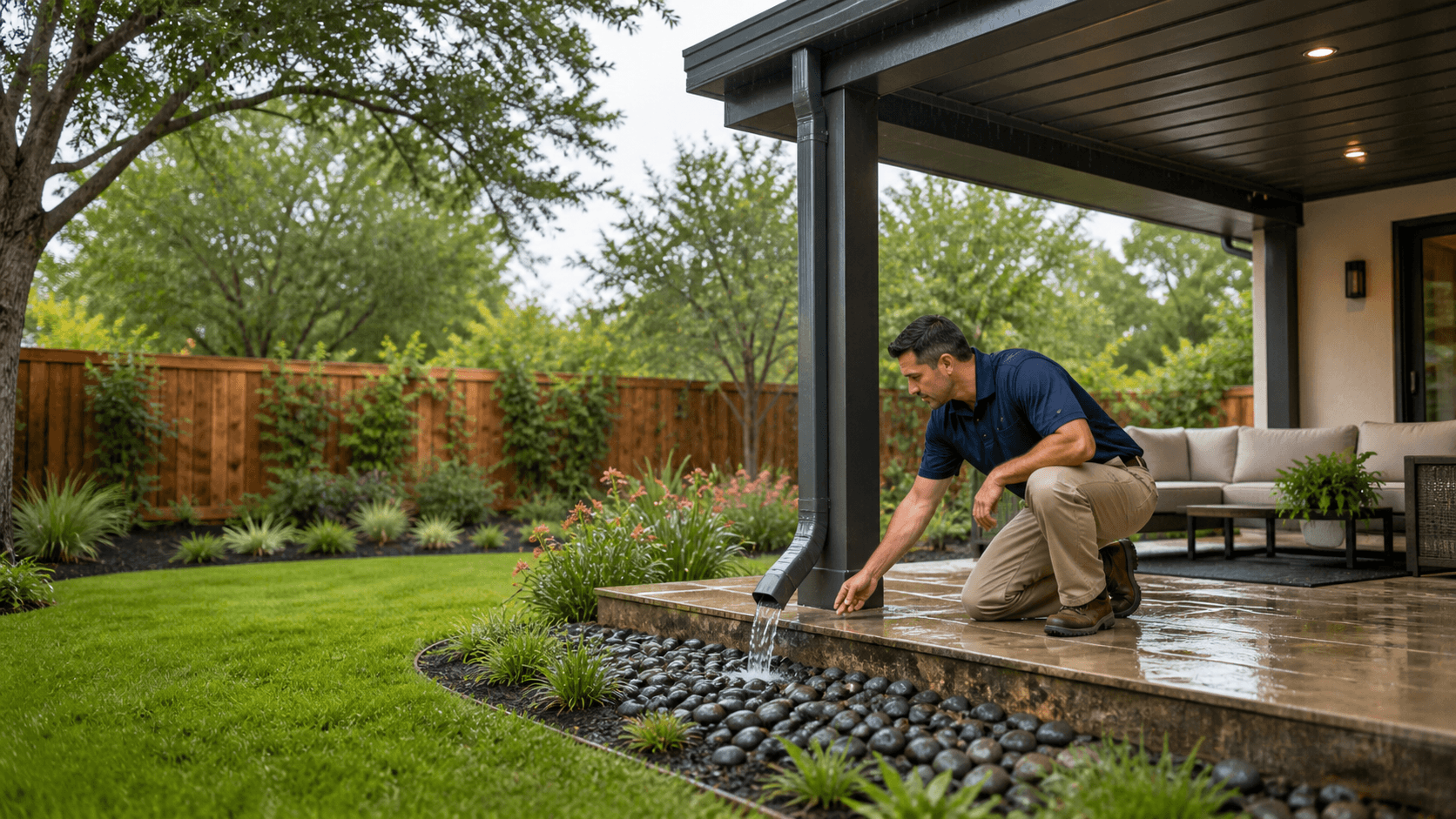
Downspouts carry that collected water to a more suitable area. Depending on the layout of the property, runoff may be directed toward a graded portion of the yard, a drainage swale, a rain garden, or another drainage solution that fits the space.
Placement matters as much as having the components themselves. A downspout should not empty near a doorway, onto a patio slab, or beside the foundation. During Austin's fast-moving storms, gutters also need to be sized and positioned to keep up with the flow rather than overflowing over the edge.
Before the wetter part of fall arrives, it helps to have a professional inspect the gutter system for leaves, twigs, and other debris. A clear gutter can do its job. A clogged one can send water over the same areas you were trying to protect.
Site Grading Prevents Water From Pooling Below
Even the best patio cover drainage needs support from the ground below it. If the area around the patio slopes toward the house or contains low spots, runoff may still collect where it does not belong. We consider the patio cover and the surrounding grade as parts of the same water-management plan.
Water often settles in places that are easy to overlook until a storm arrives. Watch for puddles near the patio slab, at the base of columns, beside walkways, or along planting borders. These spots may need grading changes or added drainage features so water can continue moving away from the covered area.
Outdoor spaces work better when each part has a role. Hardscape edges, retaining borders, planting areas, and drainage channels should guide water without pushing it into a seating area or toward the home. Planning these features together can make the patio more comfortable during humid late-summer days and more dependable when rain rolls through.
Plan Before Fall Rain Brings More Runoff
Early fall is a good time to pay attention to what happens outside after a storm. Look for water crossing the patio, gutters that overflow, muddy planting beds, and puddles near the home. These signs can show where runoff needs a better route before the next heavy rain.
When we design patio covers, patio enclosures, screen rooms, and outdoor living spaces, we account for both daily shade and the way rainwater moves through the property. A thoughtful plan helps your covered patio feel like a retreat, not another place where water collects.
Before adding or replacing a patio cover, take note of where roof runoff lands now and where it travels after reaching the ground. A clear drainage path, proper roof pitch, and well-placed gutters can help keep rain moving away from the spaces you want to enjoy.
Enjoy a Patio Cover Built for Austin Weather
Creative Sunrooms can help you choose patio covers in Austin that complement your outdoor space and support dependable performance through changing conditions. We'll discuss your goals, preferred materials, and design options to create a cover that fits your home. Ready to start planning? Contact us for a consultation.