Transform Sun and Heat Into Year-Round Comfort
Designing a glass roof sunroom in San Antonio is not just about adding more windows. It is about turning strong Texas sun, bright sky views, and rough storms into a space that actually feels good to use every day. Many homeowners love natural light but worry about heat, glare, hail, and UV damage. Those worries are real, especially as fall allergy season and stormy days start to creep back onto the calendar.
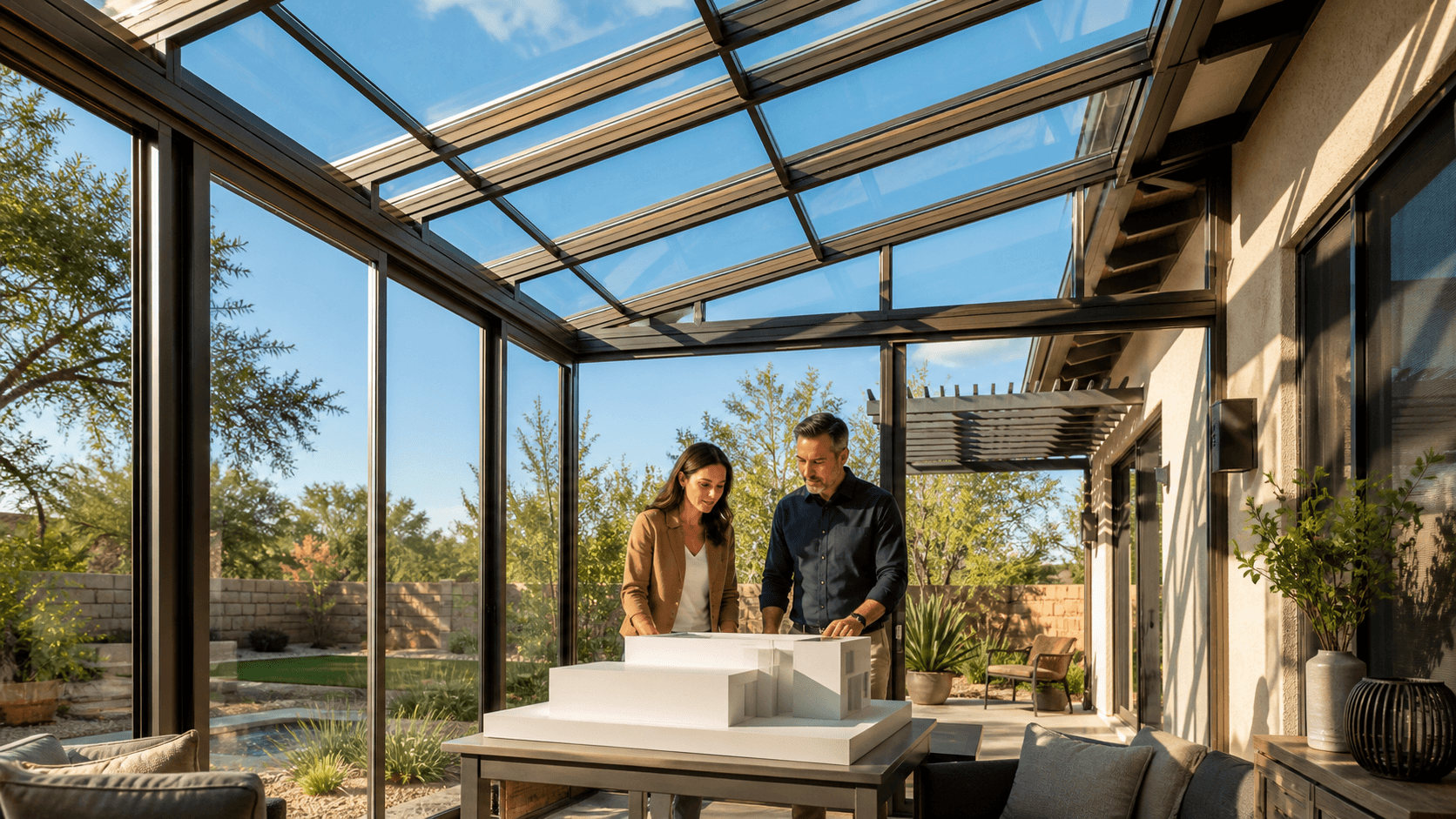
A glass roof sunroom lets you enjoy big sky views, breezes, and the feeling of being outdoors, without getting roasted or rained on. You can drink coffee under the morning light, host friends with a soft evening glow, or watch clouds move across the sky. Long-term comfort, though, depends on details that often get skipped in early planning.
Three design choices matter more than almost anything else: how the room is oriented, what kind of glass you choose, and how the structure is engineered to carry loads. When those pieces work together for our local climate, the room feels balanced and inviting instead of hot and harsh.
Choosing the Best Sunroom Orientation for Texas Sun
San Antonio sits far enough south that the sun can feel strong from almost any angle. That is great for brightness, but it can be rough on comfort if you do not plan ahead.
Here is how orientation plays out:
- South-facing glass roofs bring in lots of light through the day and steady heat.
- West-facing roofs get that late afternoon blast that can turn a room into an oven.
- East-facing spaces feel soft and bright in the morning, then calm later in the day.
- North-facing glass brings in very even, gentle light with less direct heat.
In many homes, a west-facing glass roof sunroom can still work well, but it usually needs extra help. That might include:
- Deeper roof overhangs at key spots
- Exterior shading, like solar screens or fins
- Low solar heat gain glazing to cut heat while keeping light
East or north exposures often shine as reading nooks, home offices, studios, or breakfast spaces, because they are calm and easy on the eyes. A south-facing room can work nicely when we combine smart shading, the right glass, and good ventilation.
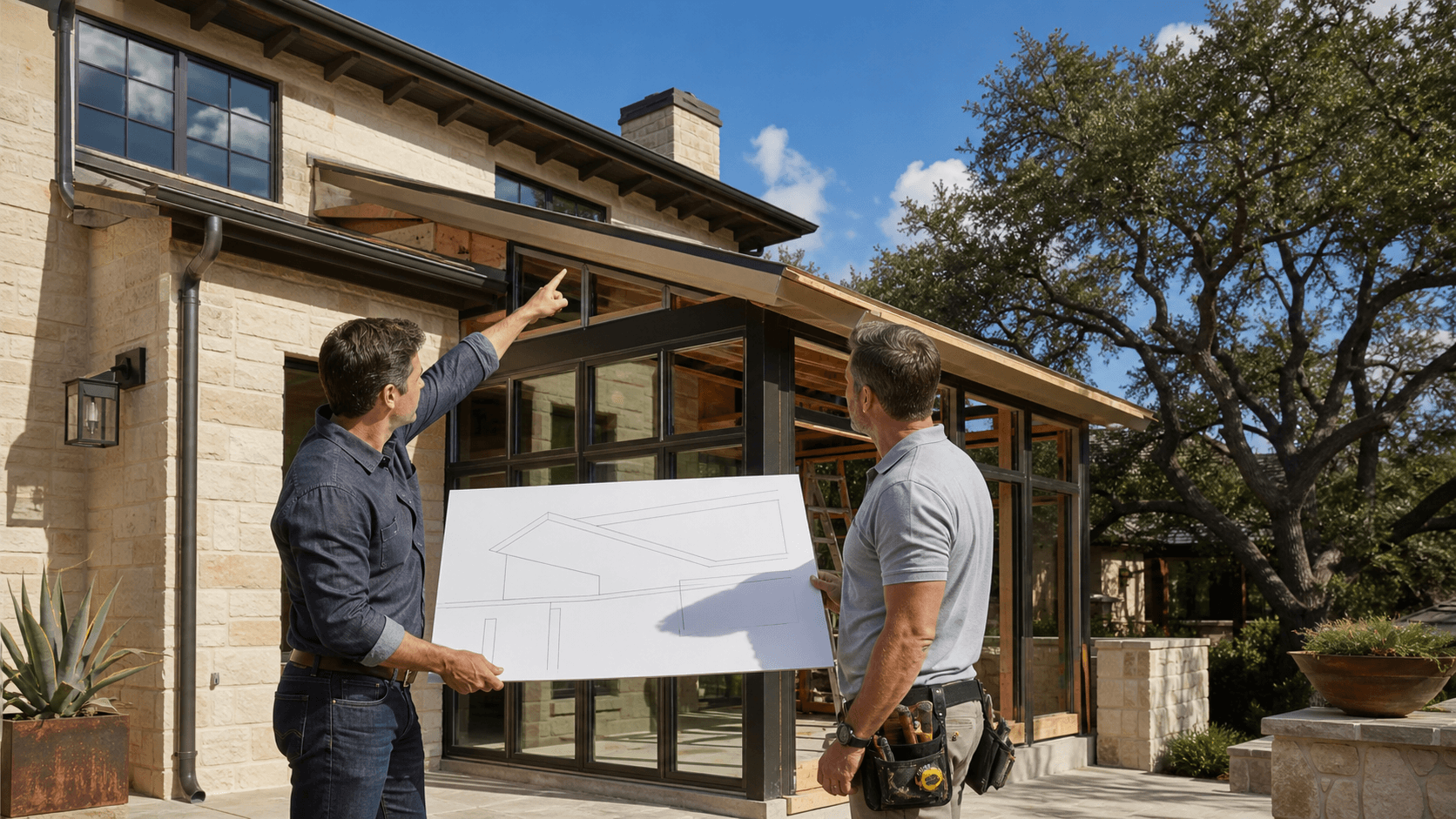
Every property is different, so we look beyond compass direction alone. During a design visit, we pay attention to:
- Existing trees that may give shade part of the day
- Shadows from second stories, chimneys, or nearby buildings
- Neighboring roofs that might bounce extra light and glare
- Prevailing breezes that can help with natural cooling
All of this shapes where the sunroom lands, how the roof is angled, and where we place venting windows and doors.
Glazing Specs That Tame Glare, Heat, and UV
Glass choice can make or break a glass roof sunroom in San Antonio. The frame can be beautiful and the orientation perfect, but if the glazing is wrong, the room will still feel too hot, too bright, or both.
Here are the main glass features in simple terms:
- Double glazing: Two panes of glass with a sealed air space for better insulation than single pane.
- Triple glazing: Three panes with two air spaces for extra insulation, more weight, and more cost.
- Low-E coatings: Very thin layers on the glass that reflect heat while letting in light.
- Laminated safety glass: Layers of glass bonded with a clear interlayer so it stays together if broken.
- Argon-filled units: Insulated units filled with argon gas to slow heat transfer compared to plain air.
For San Antonio, the big goals are:
- A low solar heat gain coefficient, or SHGC, to cut how much heat comes through the glass
- A reasonable U-factor so the room does not lose comfort in cooler evenings or windy days
- High UV rejection to help protect flooring, fabrics, and skin without making the room feel dark
Comfort is about more than temperature. We also plan for:
- Glare control on TV screens, tablets, and work surfaces
- Avoiding that chilly "cold sink" feeling when you sit right under glass at night
- Picking tints or coatings that keep the sky looking clear and natural, not too mirrored or gloomy
We usually mix glass types based on orientation. For example, we might use lower SHGC glass on the west or south roof areas and slightly more neutral glazing on the north and east to keep views crisp.
Engineering Glass Roofs for Wind, Hail, and Live Loads
A glass roof is not just a pretty lid on your sunroom. It is a working structure that has to carry real forces. In Texas, that means planning for strong winds, heavy rains, and the weight of people or equipment that may need to access the roof area for cleaning and maintenance.
Structural design needs to consider:
- Wind uplift that can pull on panels during storms
- Lateral loads that push sideways on the frame
- Dead loads from the glass and framing itself
- Live loads from maintenance access and debris buildup
Roof pitch, rafter spacing, and framing material all change what is safe and durable. Aluminum framing is common for sunrooms because it is light, strong, and low care. In some cases, steel or engineered wood may be better for longer spans or certain architectural styles.
Connection points to your existing home are especially important. If they are not designed correctly, you can have leaks, movement, or stress cracks over time. Hail is also part of life here, so we often recommend impact-rated or laminated glass on the roof for better resilience.
Good drainage is another key. Properly sized gutters, downspouts, and water channels help move intense downpours off the glass quickly, so water does not pool or creep into seams. Local codes and permits are there to protect both people and property, and engineered plans help support long-term performance and resale value.
Integrating Shading, Ventilation, and HVAC From Day One
The most comfortable glass roof sunrooms are planned like small climate systems. Instead of adding blinds or fans later, we build shading, airflow, and HVAC thinking right into the design.
Passive strategies may include:
- Roof overhangs sized for summer sun angles
- Interior shades or ceiling tracks for soft, flexible control
- Exterior solar screens for the hottest exposures
- Deciduous landscaping that gives shade in part of the year
Active systems might include:
- Ceiling fans to keep air moving and reduce that "stuffy" feeling
- Mini-split HVAC units sized for sunny spaces
- Operable skylights or roof vents that let hot air escape near the top
Season by season, the room can act differently. In fall and spring, we aim for strong cross-ventilation so you can open up and enjoy breezes with little or no mechanical cooling. On high summer afternoons, we size HVAC so the room still feels usable, even when the sun is high. When evenings are milder, good glass and shading help hold comfort without needing constant AC.
Smart controls can keep things simple. Motorized shades on timers or sun sensors can track the light for you. Zoned thermostats let the sunroom run on its own schedule, so it stays comfortable without affecting the rest of your home.
Plan Your Ideal Glass Roof Sunroom with Local Expertise
The most beautiful glass roof sunroom in photos is not always the one that feels best to sit in. Real comfort in San Antonio comes from getting orientation, glazing specs, and structural loads tuned to both our climate and your property.
As late summer rolls into school season and more time at home, it is a natural moment to think ahead. A well-designed glass roof sunroom can be ready for fall gatherings, clear evening skies, and bright spring mornings, all with a calm, steady feel that does not fight the Texas sun.
At Creative Sunrooms, we focus on turning underused patios into year-round indoor and outdoor spaces. By pairing design, engineering, and local experience, we help homeowners create glass roof sunrooms in San Antonio that stay bright, comfortable, and durable for the long run.
Get Started With Your Project Today
Transform the way you enjoy natural light at home with a custom glass roof sunroom in San Antonio designed and built by Creative Sunrooms. We take the time to understand your space, your goals, and your budget so your new sunroom feels like a natural extension of your home. If you are ready to explore design options or schedule a consultation, simply contact us and we will guide you through every step.