See Which Space Delivers More Room for Your Budget
Texas families often need more usable space without wanting the major disruption of changing the whole house. A custom sunroom can create a bright, flexible place for relaxing, sharing meals, hobbies, family time, and entertaining, while a traditional home addition may be better suited for needs like another bedroom, bathroom, or fully connected indoor living area.
The right choice is rarely just about square footage. Every project is different, with the home's layout, site conditions, materials, permits, and preferred features all shaping the final plan. When we help you compare sunroom prices with a full addition, we look at the construction scope, everyday comfort, intended use, and how the new space will fit your family for years to come.
Fall is also a smart time to start thinking ahead. With holiday gatherings, football weekends, backyard meals, and more time spent with family on the calendar, you can get a clearer picture of how an enclosed outdoor space could change the way you use your home.
Compare Sunroom Prices with Full Addition Budgets
A sunroom can be designed in several ways, and each type serves a different purpose. A screen room may focus on fresh air and insect protection. A three-season enclosure may include more weather protection and glass. A fully insulated sunroom can be planned for a higher level of comfort and more frequent use throughout the year.
Sunroom prices can be affected by details such as:
- The room's size and shape
- Foundation or patio requirements
- Roof connection and wall systems
- Windows, screens, and doors
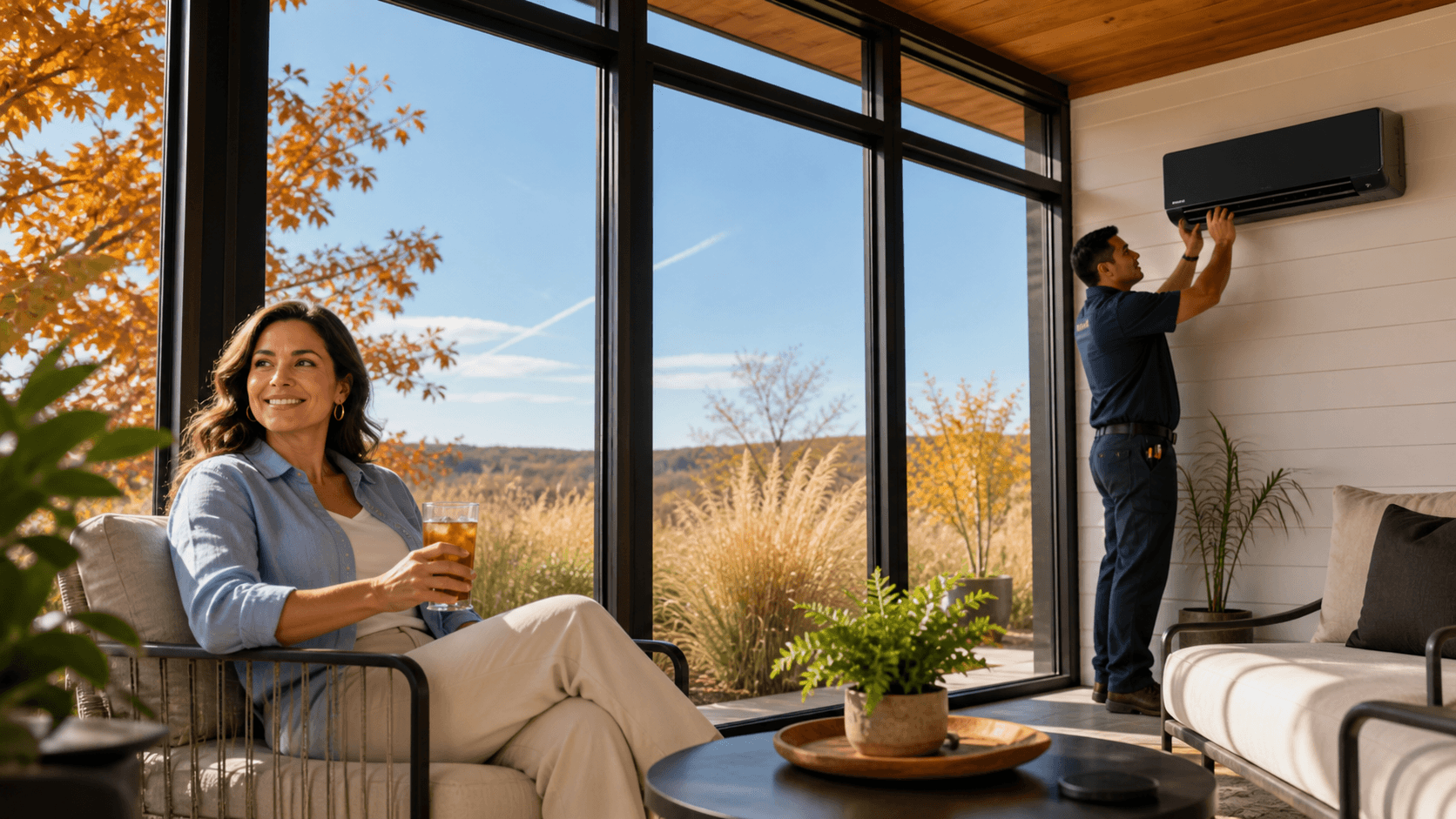
- Electrical work, lighting, fans, and climate-control options
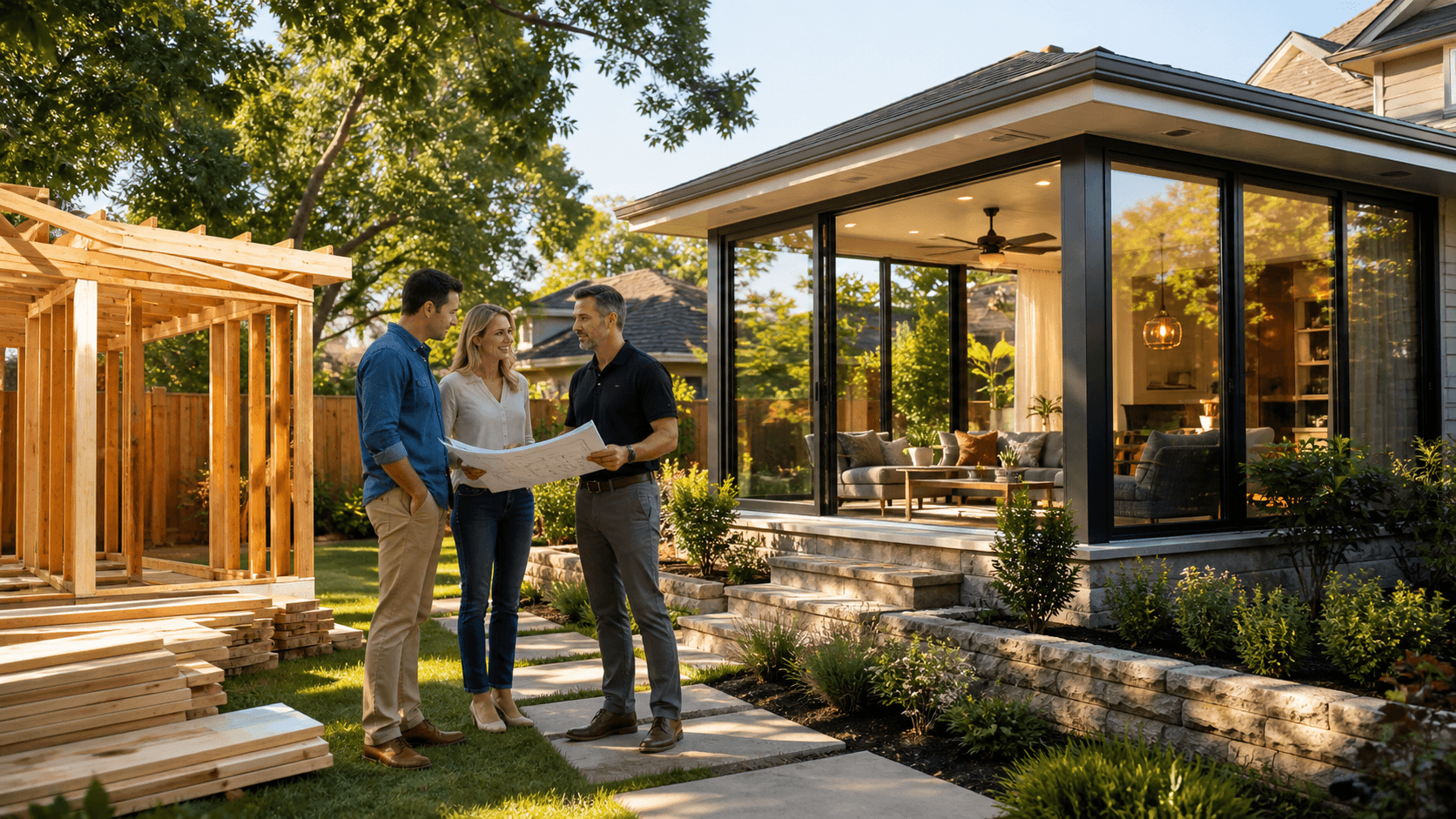
A conventional home addition usually has a broader scope because it expands the home's main interior footprint. That can involve structural framing, roofing work, insulation, HVAC connections, drywall, flooring, plumbing, interior trim, and other finish selections. It may also affect existing rooms inside the home while construction is underway.
For families who mainly want a sunny gathering spot with backyard views, a sunroom may be a more focused approach. It can give you a dedicated place to enjoy the outdoors with more protection from bugs, wind, and changing conditions, without necessarily creating a fully integrated room like a bedroom or bathroom.
The important question is not simply which project is bigger. It is which kind of space solves the problem your family actually has.
Know What Changes the Cost of a Texas Sunroom
No two sunrooms are alike, even when they look similar from the outside. A compact enclosure attached to an existing patio has different planning needs than a larger room with a new foundation, custom roofline, insulated walls, and extensive glass. That is why we recommend starting with the way you expect to use the space.
For example, a room designed for casual weekend meals may need different features than one meant for plants, pets, children's play, or regular entertaining. The amount of sun your backyard receives matters, too. Glass selection, screen options, ceiling fans, lighting, doors, and cooling considerations can all shape how comfortable the room feels during bright Texas afternoons.
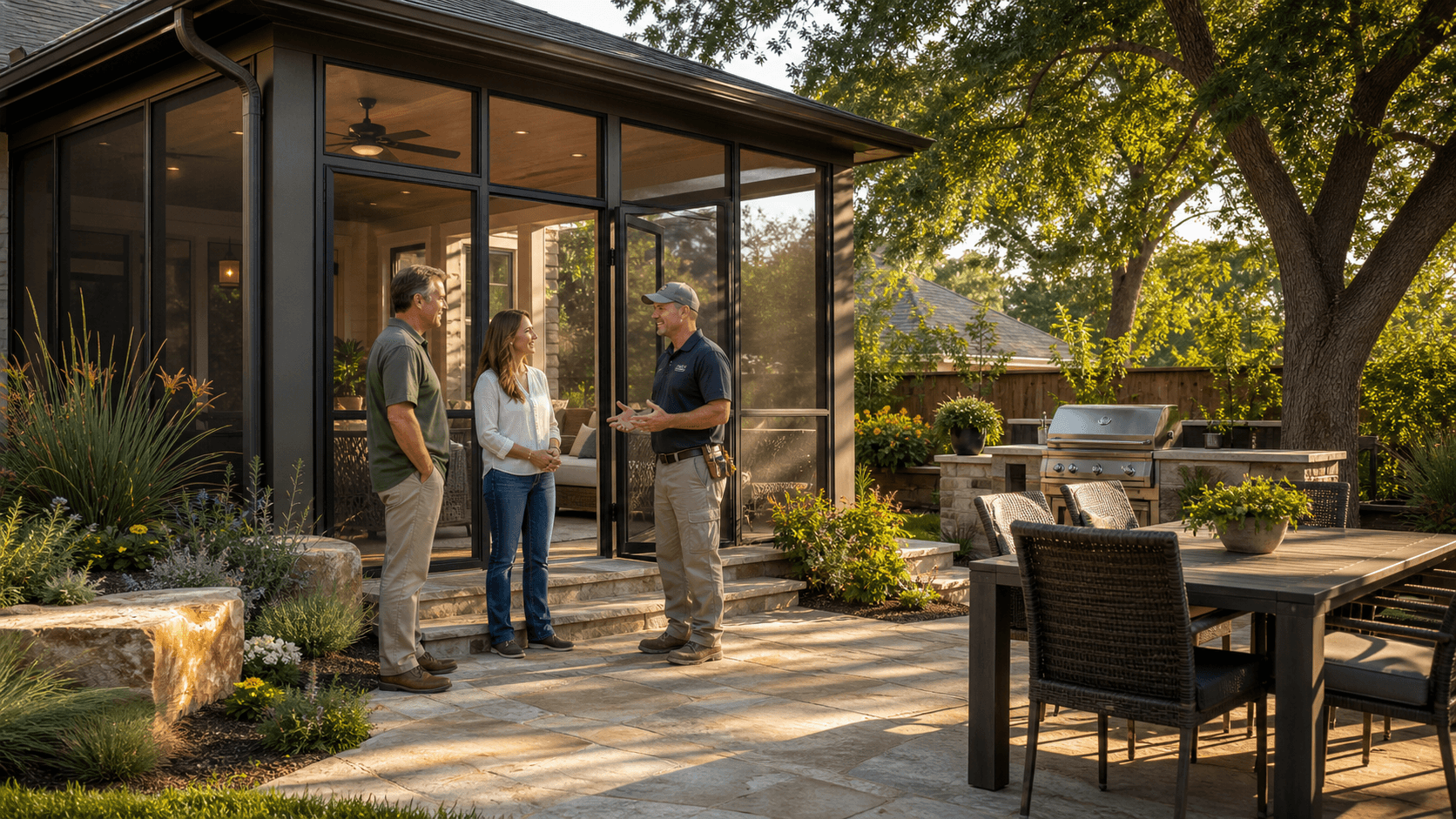
Local conditions deserve close attention. Across Texas, homes may face different site concerns related to strong sun exposure, humidity, wind, drainage, soil conditions, and local building requirements. We serve homeowners throughout San Antonio, Austin, Corpus Christi, Bryan/College Station, the Rio Grande Valley, and surrounding communities, so we understand why a site evaluation matters before finalizing a design.
During that evaluation, we can look at how the new room will connect to your home, whether the existing patio can support the plan, and what structural or permitting steps may be needed. This early review helps us recommend materials and design choices that match your desired comfort level instead of treating every enclosure as a one-size-fits-all project.
Weigh Comfort, Construction, and Long-Term Value
A sunroom can change the rhythm of everyday life. It may become the place where you drink coffee in the morning, watch children play in the yard, enjoy a favorite hobby, or host friends without worrying as much about insects. For families with pets or plant collections, the added natural light and outdoor connection can be especially appealing.
Many of the best uses are simple:
- A relaxed space for family meals
- A protected area for backyard entertaining
- A bright room for reading, crafts, or hobbies
- A comfortable spot to enjoy views of the yard
- A flexible area for pets, plants, and playtime
Construction disruption is another major part of the decision. A traditional addition may require work inside the house as well as outside. Depending on the project, that can mean changes to walls, flooring, utilities, and existing living areas. A patio enclosure or sunroom often grows outward from a patio, deck, or other outdoor area, which may limit how much of your interior life is affected during the build.
Long-term value is personal. Resale potential can matter, but daily use matters just as much. We encourage you to think about how often the room will be used, whether you want seasonal or more year-round comfort, how long you plan to stay in the home, and what part of family life would improve most with more usable space.
Plan a Fall Project Before Texas Weather Shifts
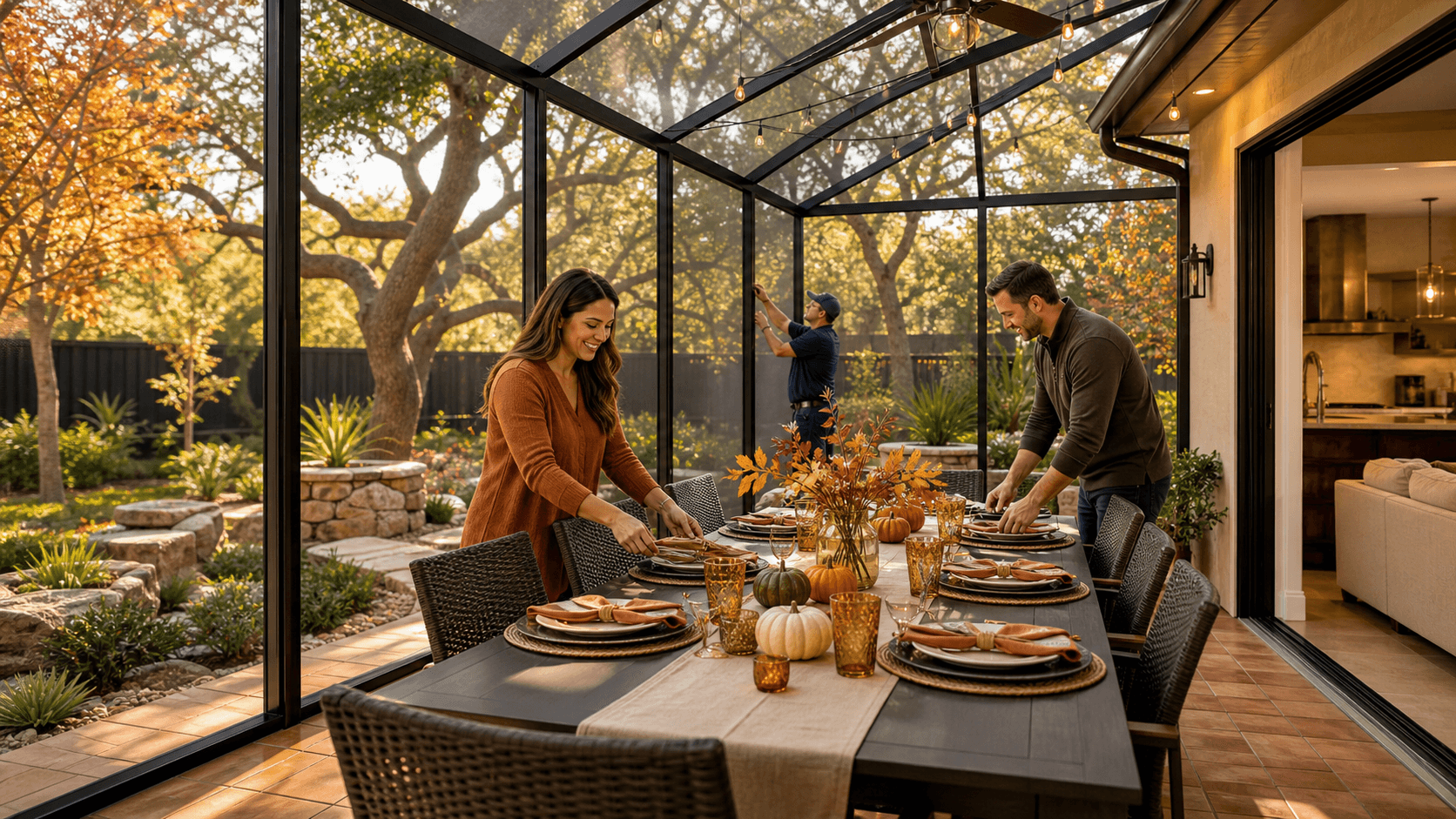
Fall brings a full calendar for many Texas households. Holiday hosting begins to take shape, sports weekends fill the schedule, and outdoor meals become more common. It is a natural time to consider whether your current patio or backyard setup gives you enough room to enjoy those moments comfortably.
Starting the conversation early gives you more time to explore design options without feeling rushed. You can think through finishes, room layouts, glass or screen choices, electrical needs, and the way the addition will look alongside your home. It also gives time to address local permits or homeowner association requirements that may apply to your property.
Before requesting estimates, we suggest talking through a few practical questions as a family:
- Do you want a seasonal space or a room used more often?
- How many people should the room comfortably hold?
- Which backyard views do you want to preserve?
- Would screens, glass, insulation, or electrical upgrades matter most?
- How should the room connect to your existing patio and home?
Clear answers make it easier to compare options based on function, not just size.
Start Designing the Right Space for Your Family
A traditional addition and a custom sunroom serve different needs. One may make sense when your family needs a fully integrated interior room, while the other may be ideal when you want more daylight, backyard connection, and flexible gathering space. Comparing sunroom prices is most useful when you also compare the purpose, comfort, construction needs, and future use of each option.
The best plan is the one that gives your family a space you will enjoy often. Think about the moments you want more room for, then choose a design that supports them in a way that feels natural for your home.
Get Clear Pricing for Your Ideal Sunroom
Creative Sunrooms can help you compare sunroom prices and find a design that fits your home's needs. Our team will walk you through available styles, features, and options so you can make an informed decision. When you are ready to discuss your project, contact us for personalized guidance.